Updated July 2026
Have you ever wondered why two people can eat the identical meal, in the identical portion size, yet see completely different results on the scale?
We typically point to the usual suspects: genetics, muscle mass, stress levels, hormones, or "fast" versus "slow" metabolisms. But there is a silent, microscopic player in this game that we often overlook: your microbiome.
How does your gut decide how many calories you absorb?
The latest research suggests that the composition of your calories, not just the number, dictates how much energy your body actually absorbs. The deciding factor is whether or not that food reaches your large intestine. The large intestine is the primary residence of your microbiome. When you eat "sturdy" foods that make it all the way down to these beneficial bacteria, your body absorbs significantly less energy.
How big is the difference?
According to dietary studies, shifting your food composition to feed the microbiome can result in an average "calorie savings" of 116 calories per day. Some individuals saw differences as high as 400 calories per day.
| Daily Savings |
Yearly Impact |
| 116 Calories |
Approximately 12 lbs body weight |
| 400 Calories |
Significant metabolic shift |
Imagine losing 12 pounds in a year without lowering your calorie intake, simply by changing where those calories are digested! This is a big part of why the old calories in, calories out model only tells part of the story.
How does the microbiome "tax" work?
Your microbiome isn't just sitting there; it's a living ecosystem that requires energy to thrive. When you eat the right foods, your gut bacteria "pay themselves" first. They consume a portion of those calories for their own survival rather than allowing them to be absorbed into your bloodstream. The best part is that it's a positive feedback loop. The more you feed your microbiome, the more it grows, and the more energy it requires, effectively super-charging your weight loss efforts from the inside out.
How do you feed your gut and not your waistline?
To keep those calories moving toward the large intestine, you need to focus on three things.
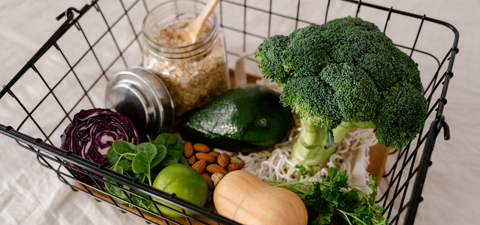
1. Hit the "fiber plus" mark. Most of us are fiber-deficient. Aiming for an additional 10 grams per day is the sweet spot. Seek out a mix of soluble and insoluble fibers from fruits, vegetables, and whole grains.
2. Optimize for resistant starch. This is your microbiome's favorite fuel, because it "resists" digestion in the small intestine. Good sources of resistant starch include beans, legumes, oats, quinoa, and farro. Levels can also be influenced by the physical state of the food when you eat it. Potatoes or pasta that have been cooked and then cooled develop higher levels of resistant starch, and a slightly green banana has significantly more than a spotted, ripe one.
3. Choose whole over processed. Whole foods require more mechanical breakdown through chewing and digestion. This slower process increases the likelihood that food particles reach the large intestine intact. The rule of thumb: eat the orange, don't just drink the juice.
Want to understand your microbiome better?
Your gut affects far more than your weight. If you're new to this topic, start with what the gut microbiome is and why it matters. From there, you can dig into the two tools for feeding your good bacteria, prebiotics and probiotics; how your gut bacteria can work against your heart by producing TMAO; whether apple cider vinegar lives up to its gut-health reputation; and how your whole system runs on a daily circadian clock.
What does this mean for eating more, not less?
It means the quality of your food can matter as much as the quantity, which is exactly why you can sometimes lose weight by eating more, not less. At Step One Foods, we talk a lot about heart health, but the "side effects" of our formulations go much deeper. Our whole-food products are intentionally designed with a complex mix of fibers and resistant starches, and deliver that extra 10 grams of fiber you need each day. When you eat Step One, you aren't just managing your cholesterol, you're feeding your microbiome. And as it turns out, when you formulate food for true health, weight management often follows naturally.
If you're new to this site and found this useful, I write one of these evidence-based articles every week. You can get them in your inbox by joining my email list at the bottom of this page. No spam, no requirement to buy anything, just practical knowledge.


The Science Behind It
Tested & Proven Results.
- Cardiologist formulated
- Supported by over 500 publications
- Clinically-proven, in a double-blind randomized trial with Mayo Clinic and The University of Manitoba
80% of participants lowered their cholesterol in just 30 days. With just two servings per day, Step One Foods offers a proven-effective way to naturally lower LDL (bad) cholesterol.
Try Step One Foods Today!