Updated July 2026
Which is worse for your heart: an egg or a hot dog? Notice I didn't ask which has more cholesterol — that's the egg, with about 187 mg, versus roughly 40 mg in a hot dog. And yet the hot dog is far worse for you. That paradox is the whole point: the cholesterol in your food is not the main thing that raises the cholesterol in your blood.
Does eating cholesterol raise your blood cholesterol?
For most people, only modestly. Your liver makes the large majority of the cholesterol in your bloodstream, and it adjusts its own production far more than the cholesterol you eat ever could — which is why the old limits on dietary cholesterol were quietly dropped from the guidelines. The dietary drivers that really push LDL up are saturated and trans fats, which slow down the receptors your body uses to clear LDL, the mechanism I walk through in what causes high cholesterol. In other words, it's usually the fat riding along with the cholesterol, not the cholesterol itself, that does the damage.
So are eggs bad for you?
For most people, no. An egg is high in cholesterol but low in saturated fat, and rich in protein, B vitamins, and iron — a perfectly fine choice in moderation within a mostly-plant centric diet. A hot dog has less cholesterol but comes loaded with saturated fat, sodium, and processing, which is exactly why it's the worse pick. It's the company the cholesterol keeps that matters. (One caveat: a minority of people are "hyper-responders" whose LDL does climb when they eat more cholesterol. If your numbers jump when eggs become a daily habit, ease off — but for most, eggs in moderation are fine.)
Which high-cholesterol foods should you actually avoid?
The ones that pair cholesterol with saturated or trans fat. Those are the real culprits:
- Red meat — burgers, ribs, steak, pork chops. If you don't want to cut out completely, keep portions small (about 3 ounces) and to once a week at most. Better choice: fish and shellfish. Even shrimp, high in cholesterol, leaves your blood cholesterol alone as long as you don't drown it in butter. (Poultry has saturated fat too, so "no red meat" doesn't mean "unlimited chicken.")
- Fried foods — frying loads food with saturated or trans fat. Better choice: bake or air-fry when you want crunch.
- Processed meat — the World Health Organization classifies bacon, hot dogs, and salami as carcinogens, and they're heavy in sodium and saturated fat. Better choice: special-occasion only.
- Bakery items — cookies, cakes, and pastries usually mean butter or shortening (saturated and trans fat) plus sugar, itself a driver of high cholesterol. Better choice: bake at home, where you control the fat and sugar.
What should you eat to lower cholesterol instead?
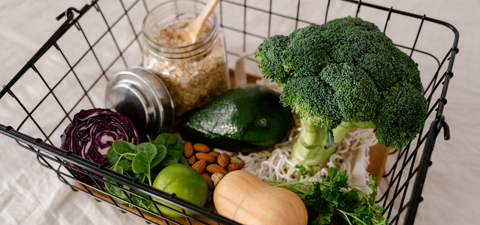
Eating for your heart isn't only about what to avoid — the more fun and more effective approach is about what to add. Build meals around plants, fiber, and healthy fats, and most of the "worst foods" crowd themselves out on their own. My favorite one-line version of the best dietary advice is still that of Michael Pollan: Eat food. Not too much. Mostly plants. It's also the whole idea behind Step One Foods: concentrating the fiber, sterols, and healthy fats that actively lower LDL, so you work with your biology instead of just avoiding a list. For the how-to, see how to lower LDL; for the fat details, which fats help and which hurt.
If you're new to this site and found this useful, I write one of these evidence-based articles every week. You can get them in your inbox by joining my email list at the bottom of this page. No spam, no requirement to buy anything, just practical knowledge.


The Science Behind It
Tested & Proven Results.
- Cardiologist formulated
- Supported by over 500 publications
- Clinically-proven, in a double-blind randomized trial with Mayo Clinic and The University of Manitoba
80% of participants lowered their cholesterol in just 30 days. With just two servings per day, Step One Foods offers a proven-effective way to naturally lower LDL (bad) cholesterol.
Try Step One Foods Today!