
Most of us enter the new year full of purpose and resolve. We WILL be better in this new year. We WILL lose weight! We WILL run our first marathon! We WILL learn a new language! And that’s just for starters.
The sad reality is that despite our desires, our actions often fall short. We fail. Early and spectacularly. In fact, many of us end up throwing in the towel by mid-January.
But that doesn’t take away from the fact that we all truly WANT to be better.
The Problem Isn’t Motivation. It’s Scale.
And this is where right-sizing our resolutions becomes critical. Otherwise, these resolutions just become wishes, not actions.
Most resolutions fail because they don’t account for how hard it is to change. Change IS hard. That’s why we’re not already in possession of a marathoner’s work-out discipline, a perfectly sculpted body, and fluency in multiple languages. This stuff takes WORK. A LOT of WORK.
Trying counts. You can’t improve anything without trying, so that must be part of the plan. But the other thing that needs to be in the mix is REALITY. We might all want big changes, but the reality is most of us are only capable of small ones.
Why Small Changes Work Better
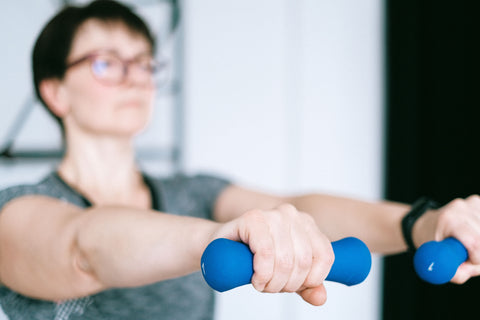
This is why my yoga resolution failed last year. I wasn’t realistic. I knew I had a very busy year coming up, but I proclaimed that I would significantly change how I function day in and day out anyways. There’s only so much I could have asked of myself, and taking 1–2 hours out of my week, every week simply had no chance of happening. As part of giving myself grace, I’m coming to terms with that.
Especially since studies have shown that it’s small modifications that have the greatest likelihood of sticking.
Which, ironically, is one of the inspirations behind Step One Foods! (Doctor – heal thyself!) After all, I’ve seen SO many patients fail at big dietary overhauls. The reason Step One is a super simple twice-a-day eating program that requires almost no mind share is because it is meant to be a small modification. That just happens to be incredibly powerful. Because it is formulated specifically to yield a measurable health benefit. Our approach makes it easy to take a resolution like “eat better” and turn it into concrete action.
How to Right-Size Your Resolution for 2026
Whatever the resolution you made for yourself for 2026, right size it. Make sure it is realistic in terms of time commitment and degree of change required. Small realistic lifestyle adjustments - that require little deviation from what you already do - can truly add up. Because if they’re maintained, their impact is massively magnified. Our clinical trial proved this decisively.
So, if you set a goal for the new year - and are feeling like it may have been asking too much of yourself - don’t just give up. Shrink it, right size it so that you CAN succeed. Becoming fluent in a new language might not be in the cards, but perhaps committing to 10 minutes a day of online instruction could be. Running a full marathon this year might be a distant mirage, especially if you’re currently a couch potato, but making it a habit to go outside for a run or walk every day could be entirely achievable.
Progress Beats Perfection
Health is based on the cumulative impact of billions of choices and actions we take during our lifetimes. It’s certainly not based on being “perfect” for a short period of time. That means EVERY move towards “better”, even if it seems minuscule on its own, will reward you in time.
So here’s to all of us being slightly better in 2026!
The Science Behind It
Tested & Proven Results.
- Cardiologist formulated
- Supported by over 500 publications
- Clinically-proven, in a double-blind randomized trial with Mayo Clinic and The University of Manitoba
80% of participants lowered their cholesterol in just 30 days. With just two servings per day, Step One Foods offers a proven-effective way to naturally lower LDL (bad) cholesterol.
Try Step One Foods Today!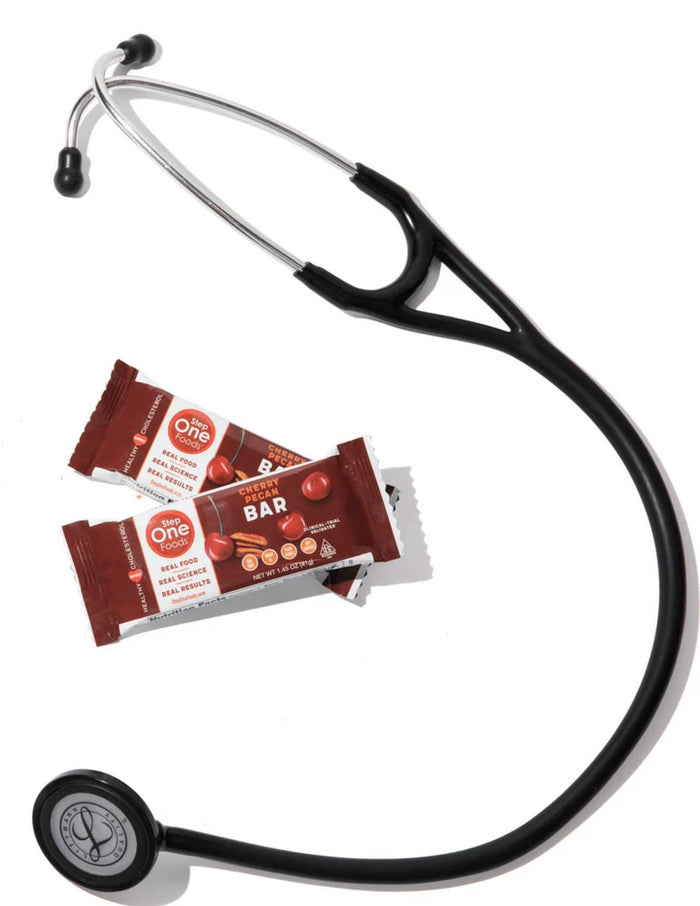
Better heart health starts with better information.
Join thousands who receive Dr. Klodas' weekly insights on cholesterol, cardiometabolic health, and food strategies that actually work.
New articles every week. Unsubscribe any time.