Updated July 2026
So far we’ve covered how these conditions sit on one spectrum of glucose dysregulation, ultimately caused by chronic calorie excess, and how fat accumulation in the liver, pancreas and muscle leads to elevated blood sugar and can set off a self-perpetuating negative spiral. In this final article, we’ll discuss how to get rid of abnormal glucose readings for good. If you’re just joining, I’d encourage you to first read the earlier articles.
How do you reverse high blood sugar?
By flipping the equation that caused it — a sustained calorie deficit. If chronic calorie excess puts you on a negative glucose spiral, a calorie deficit should have the opposite effect. And this is in fact the case. The best news? Blood sugar levels can improve quite quickly.
This was first appreciated when very overweight patients with T2DM underwent gastric bypass surgery. Calorie intake is severely reduced in these individuals after surgery and blood glucose levels fall precipitously – so much so that diabetes medications may have to be discontinued altogether. The ensuing weight loss over time eventually leads to remission of type 2 diabetes (in those individuals with enough functioning pancreatic beta cells to produce adequate insulin outputs).
Which fat leaves your body first when you lose weight?
The dangerous fat goes first. If you recall, we have 2 storage sites for fat – the subcutaneous space and everywhere else. The good news is that, in individuals who have exceeded their personal fat threshold, the fat that melts away preferentially with calorie restriction is the fat that deposits everywhere else. So, fat will leave the pancreas, the liver and muscles before it leaves the subcutaneous space. This means weight loss is disproportionately beneficial for overall health in individuals with dysregulated glucose metabolism.
How much weight do you need to lose to reverse diabetes?
For most people, roughly 15% of body weight for type 2 diabetes and about 10% for prediabetes. In general, to achieve normalization of blood sugar levels, patients with T2DM need to lose about 15% of their body weight. For individuals with preDM, a weight loss of about 10% starting weight is required. So, a 200 lb person with T2DM will need to get down to 170 lbs. In calories, that’s about a 100,000-point deficit. If you normally eat 2000 calories per day, it will take 100 days of eating 1000 calories per day to get rid of your T2DM. Yes, that requires commitment. But if you have T2DM, your hard effort could be rewarded with a health miracle after a relatively short period of time.
Please note: Drastic calorie restriction should not be undertaken lightly. Always discuss any major dietary changes with your physician to make sure this makes sense for you, that medications don’t need to be adjusted, and that there is a plan for follow-up and periodic health monitoring.
Is keto a good way to reverse diabetes?
Not really — it improves the numbers while leaving the underlying problem in place. A ketogenic diet, though popular for managing T2DM, is not necessarily the best approach. In fact, it can lull you into a false sense of security and a metabolic merry-go-round.
Ketogenic diets are supposed to limit carbohydrates to 10% of calories, with protein and fat comprising the rest. The scarcity of carbohydrates in the diet means that blood glucose generated by what we eat is markedly reduced. Which means there is less glucose that needs to be stuffed into muscle – and more of the insulin our body produces can be deployed to halt the liver from releasing excess glucose into the bloodstream.
Put those two things together, and you can end up with markedly improved blood sugar control. So what’s the downside?
The downside is the high fat content of a ketogenic diet. Remember, we are VERY GOOD at storing fat. So even with a relative calorie deficit, fat will be slow to leave our livers, pancreas and muscles, because we are constantly flooding our system with fat when following this eating plan.
The result? Incomplete remission with fat remaining in places it shouldn’t be. Which means your liver is still not hearing your pancreas very well, the beta cells are still being suffocated, and muscle is still looking somewhat marbled. This is why people who have perfectly fine HbA1Cs while following a ketogenic diet will see their glucose levels spike after eating any carbohydrates. Their insulin sensitivity is not fully restored.
Ironically, keto followers will blame carbohydrates for their glucose spikes and revert back to their high fat eating plan – only to keep themselves trapped in the keto merry-go-round even longer.
Can GLP-1 drugs reverse diabetes?
They make the calorie deficit easier, but leaning on them alone backfires — they cost you muscle, your main reservoir for storing glucose. In the context of T2DM, preDM and IR remission, GLP-1s (think Ozempic, Wegovy, Munjaro, and Zepbound) work by reducing appetite and improving insulin release. That means staying true to that 1000 calories per day goal can be much easier. Plus, we have more insulin circulating around to deal with any blood glucose excess. Win-win? Not exactly.
Although all calorie restricted diets will have us lose not only some fat but also some muscle, GLP-1s appear to disproportionately induce muscle loss. This means we are disproportionately reducing our storage depot for sugar. Go off GLP-1s and see blood glucose levels rise due to a reduction in storage capacity and the unmasking of reduced insulin release from the pancreas. This is why simply relying on GLP-1s as the cure is not enough. You have to be extremely strategic in terms of what you eat and how much you exercise.
There is much more to say about GLP-1s. If you missed that series, you can find it here.
What is the best way to eat to reverse diabetes?
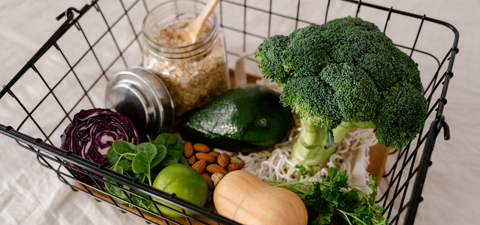
A whole-food, plant-centric diet that goes easy on fat. Reducing calorie intake can be daunting. Which is why a whole food, plant-centric approach can be such a helpful eating plan. Leafy greens, vegetables, fruit, and even beans and legumes are nutrient dense but calorie poor. This translates into being able to eat larger volumes of food without sacrificing calorie control. Plus, these items tend to be high in fiber which helps keep us feeling fuller longer and stimulates natural GLP-1 production via the microbiome.
Going easy on the fat means we are not over-consuming the thing we are trying to get rid of. This does not mean you can’t have ANY fat. It just means you want to be choosing leaner proteins. So, chicken breast not thighs, lean cuts of beef, lower fat yogurts, canned tuna packed in water not oil. Nuts in moderation. Plenty of beans and legumes. You get the picture.
This approach not only helps us lose weight, it’s also the eating approach most closely linked to overall health. Which means you are likely to improve multiple health markers all at once!
Does exercise help reverse diabetes?
Yes, and it isn’t optional — even a short walk after meals lowers blood sugar and protects muscle. Improved blood sugar can be attained for the short and long haul with added exercise. Studies have shown that going for a 15-minute walk right after a meal can yield profound improvements in blood glucose levels. This is likely because we are using up stored glucose in muscle, thus making room for the sugar that’s coming from the meal. We are also using our muscles – so they’re less likely to shrink during the weight loss process.
Plus we are burning calories in the process! Walk 15 minutes 3 times per day and you might just cover a couple of miles, burning 200 calories. If you’re that 200 lb person trying to get to 170 lbs, you’ll get there 3 weeks faster compared to just reducing calories alone!
The bottom line
Chronic calorie excess can lead to profound metabolic abnormalities. Acted on early enough, these abnormalities are reversible, but the farther along the spectrum you are the greater the effort required to reverse them. Medications can help control blood sugar levels but ONLY YOU have the power to cure yourself.
Reality Check
This blog series covers an incredibly important topic, but even I have to admit that the timing of the series is probably not the best. I don’t know about you, but the last thing I want to think about as Christmas approaches is fat accumulating in my liver!
The point of presenting this data is not to make you feel guilty about eating a cookie! Rather, it is to equip you with information you can use to help improve your own health for the long haul.
So, if you are considering a health goal for 2026 and you have PreDM or T2DM or markers of insulin resistance (abnormal triglyceride levels, low HDL, high normal HbA1C), use this information to springboard your efforts and improve your numbers – and health — for good.
And make 2026 the year you un-do it! Needing fewer medications and at least one less diagnosis on your list is absolutely attainable.
If you're new to this site and found this useful, I write one of these evidence-based articles every week. You can get them in your inbox by joining my email list at the bottom of this page. No spam, no requirement to buy anything, just practical knowledge.
The Science Behind It
Tested & Proven Results.
- Cardiologist formulated
- Supported by over 500 publications
- Clinically-proven, in a double-blind randomized trial with Mayo Clinic and The University of Manitoba
80% of participants lowered their cholesterol in just 30 days. With just two servings per day, Step One Foods offers a proven-effective way to naturally lower LDL (bad) cholesterol.
Try Step One Foods Today!