Updated July 2026
The Blue Zones are the handful of places around the world where people routinely live to 100 in good health, and interest in eating the way they do keeps growing. It's popular enough that marketers have coined "bluetrition" to describe it without using the dreaded word diet. That instinct to avoid the word is telling, because the real lesson of the Blue Zones is that they aren't dieting at all.
What is the Blue Zones diet?
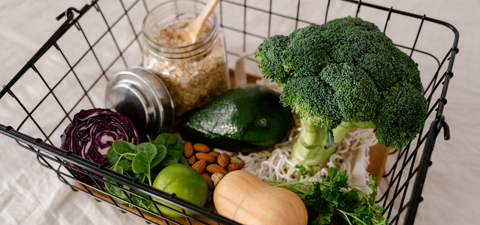
It's less a diet than a description of how the world's longest-lived people happen to eat. The concept was popularized by author and explorer Dan Buettner, based on the habits of communities in places as far-flung as Okinawa in Japan, Nicoya in Costa Rica, and Ikaria in Greece. What they eat is remarkably consistent: whole grains, greens, tubers, beans, fish, only small amounts of meat and cheese, very little added sugar, and virtually no processed food. Notably, it's carbohydrate-rich and built overwhelmingly around plants, close to the opposite of the restrictive, meat-heavy plans that otherwise dominate weight-loss culture.
Why does the Blue Zones approach work when diets don't?
Because it isn't about restriction, it's about nourishment and joy. The Blue Zones philosophy isn't a set of rules to endure. It's about feeding your body foods you actually want to eat and that make you feel good. And joy in the fullest sense: joy because you feel well, because you're mentally sharp, because you're not dependent on a fistful of medications, because you have energy to spare. That's a world away from the deprivation cycle that makes most diets fail, and it's a big part of why people are drawn to bluetrition.
There's also more to it than food. Eating nutritious food fosters longevity, but so do social connection, movement, and mental health. That's the deeper teaching of the Blue Zones: health comes from the interplay of how you eat, how you move, and how connected you are to the people around you. Diets tend to isolate you from all three. The Blue Zones way quietly restores them.
How do you eat this way in a world that isn't built for it?
You get the food part reliably right, then spend your energy on the rest of life. The honest challenge is that most of us don't live in Okinawa or Ikaria. We don't have time to cook beautiful meals from scratch every day, we're surrounded by an environment engineered to push processed food at us, and cooking doesn't bring everyone joy. Aspiring to Blue Zones eating is easy; doing it daily is hard.
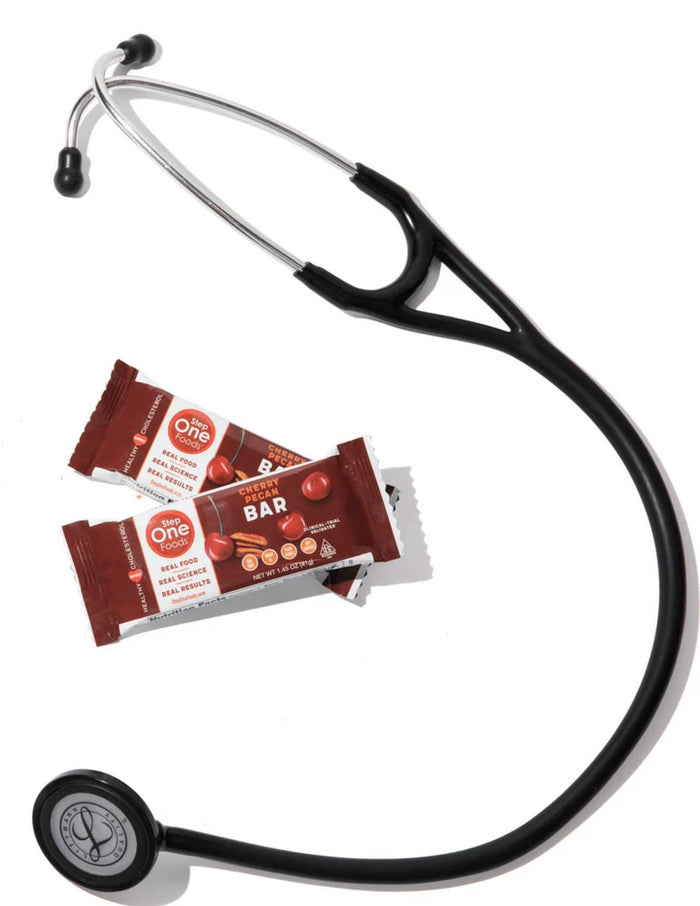
That gap is one of the reasons I created Step One Foods, to make getting the food part right easier, so you can stop dieting and focus your energy elsewhere. Whether that's hiking up a mountain, losing yourself in a hobby, or FaceTiming with a grandchild, the point of eating well was never the eating itself. It's the long, vivid life it makes possible.
If you're new to this site and found this useful, I write one of these evidence-based articles every week. You can get them in your inbox by joining my email list at the bottom of this page. No spam, no requirement to buy anything, just practical knowledge.


The Science Behind It
Tested & Proven Results.
- Cardiologist formulated
- Supported by over 500 publications
- Clinically-proven, in a double-blind randomized trial with Mayo Clinic and The University of Manitoba
80% of participants lowered their cholesterol in just 30 days. With just two servings per day, Step One Foods offers a proven-effective way to naturally lower LDL (bad) cholesterol.
Try Step One Foods Today!