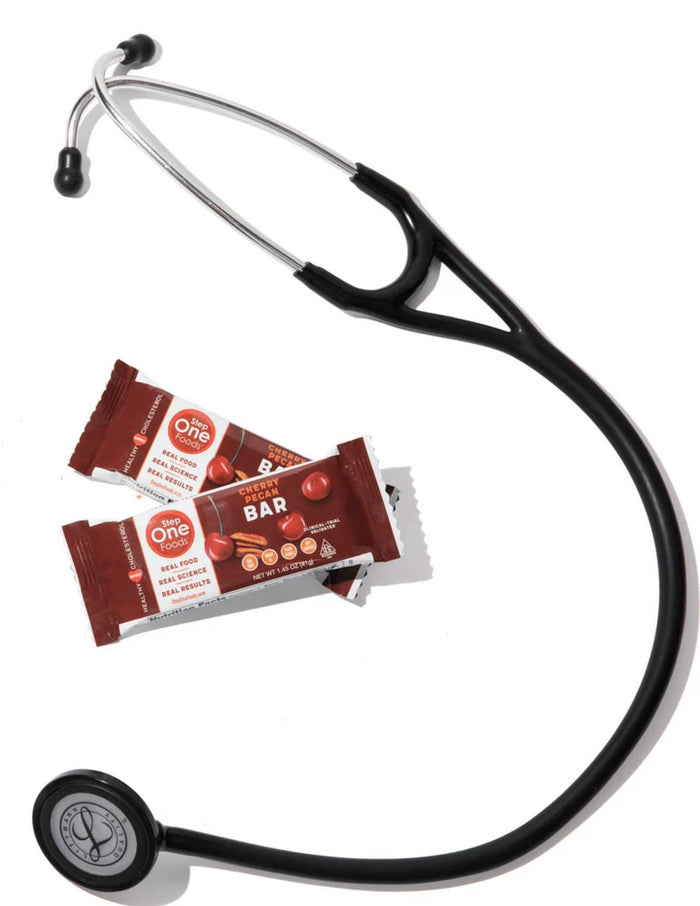
Most of us snack. In fact, research suggests that snacks now account for nearly a quarter of the average adult's daily caloric intake. That's not inherently a problem - it's actually an opportunity. Because when you snack well, you're not just holding hunger at bay until your next meal. You're giving your body extra chances to take in the nutrients it genuinely needs more of.
Here's the thing: the typical American diet is chronically short on fiber, healthy fats, and antioxidants. Not a little short — a lot short. The average adult gets roughly 16 grams of fiber daily against a recommended 25–38 grams. Most people aren't hitting meaningful targets for omega-3s or polyphenols either. And yet we're snacking anyway. The opportunity cost of snacking poorly - on foods that deliver nothing but refined carbohydrates and added sugar - is enormous.
So what should you prioritize – and what should you be on the lookout for?
What to Look For
Fiber First
If there's one nutrient to anchor your snack choices around, it's fiber. A landmark study analyzing data from nearly 250 million person-years found that people who ate the most dietary fiber had a 15–30% lower risk of cardiovascular disease, type 2 diabetes, colorectal cancer, and all-cause mortality compared to those who ate the least. The dose-response relationship was clear: more fiber, better outcomes.
Fiber works on multiple levels. It slows digestion, which blunts the blood sugar spike that follows eating and keeps you fuller longer. It feeds the beneficial bacteria in your gut, which produce short-chain fatty acids that aid our natural GLP-1 production, reduce inflammation and support immune function. And it physically bulks up your stool in ways that keep your digestive system running smoothly.
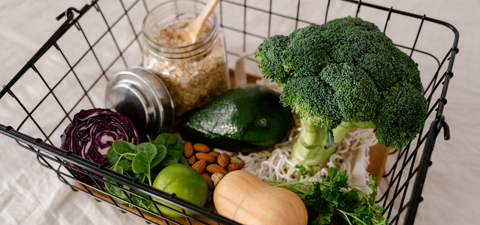
Good fiber-forward snack choices include nuts and seeds (almonds, chia seeds, flaxseed), fresh fruit, raw vegetables, legume-based options, and whole-grain products with actual intact fiber rather than "enriched" flour dressed up with a health halo. Avocados are also fiber rich. Which means chips and guac can be a great snack (with the right chips and in reasonable quantities).
When reading a label, aim for snacks that deliver at least 3 grams of fiber per serving. Five or more is even better.
Healthy Fats
Fat got a bad reputation it didn't entirely deserve. Decades of low-fat dietary guidance steered people toward products where fat was replaced with sugar and refined carbohydrates - a trade that, from a metabolic health standpoint, not only didn't pan out… it was an unmitigated disaster.
The fats worth seeking out in snacks are the unsaturated varieties: monounsaturated fats (found in nuts, seeds, and avocado) and polyunsaturated fats, particularly omega-3 fatty acids. Omega-3s - EPA, DHA, and ALA - have among the most robust evidence bases of any nutrient in nutrition science. Research has linked adequate omega-3 consumption to better cholesterol profiles, reduced markers of systemic inflammation, better cognitive function, and improved mood.
Walnuts, chia seeds, flaxseed, and hemp seeds are among the best plant-based sources of ALA, the omega-3 your body can convert (in limited amounts) to the more potent EPA and DHA. Snacks built around these ingredients will deliver something meaningful, not just calories.
A practical note: don't be misled by the total fat number on a nutrition label. A snack with 14 grams of fat from almonds is nutritionally very different from one with 14 grams of fat from partially hydrogenated oils or saturated fat from palm kernel oil. Look at the type of fat, not just the amount.
Antioxidants
Every day, your cells produce free radicals — unstable molecules that damage DNA, proteins, and cell membranes and contribute to aging and chronic disease. Antioxidants neutralize free radicals before they can do harm. The research connecting antioxidant-rich diets to better health outcomes is extensive: lower rates of cardiovascular disease, reduced cancer risk, and slower cognitive decline have all been associated with higher intake of polyphenols, flavonoids, carotenoids, and vitamins C and E.
The challenge is that antioxidants don't come in a capsule you can take once and forget — they work best when consumed regularly, in diverse forms, from whole food sources.
This is where snacking becomes genuinely powerful. A small handful of dark berries. A square or two of high-quality dark chocolate (70%+ cacao). Raw nuts. Green tea. Real fruit. These aren't just pleasant additions to your day — they're meaningful contributions to your antioxidant intake at a time when most people are eating their lowest-quality food.
What to Watch Out For
Added Sugar
This one isn't complicated. Added sugar delivers calories with essentially no nutritional benefit, drives blood sugar spikes that lead to energy crashes, and contributes to insulin resistance over time. The World Health Organization recommends keeping free sugars below 10% of total caloric intake — ideally below 5%. Most packaged snack foods blow through that budget quickly.
The tricky part is that added sugar hides under more than 60 different names on ingredient labels: cane syrup, dextrose, maltose, fruit juice concentrate, brown rice syrup, barley malt, turbinado sugar, and on and on. The simplest rule: check the "Added Sugars" line on the nutrition facts panel (it's now a required disclosure in the US). Aim for snacks with less than 5 grams of added sugar per serving, and ideally less than that.
A major call out here: it's the ADDED part in “added sugars” that is important. Sugars that are delivered as part of whole foods (like the sugar in a whole apple or a whole date) have vastly different impacts on our biochemistry. And that’s because those sugars come with fiber as part of the package. And watch out for sneaky "non-nutritive" sweeteners. They don't have to be listed as added sugars (because they don't contribute calories), but they can still be toxic to our microbiome.
Refined Carbohydrates
Refined carbohydrates - white flour, white rice, and similar - are essentially fiber-stripped grains. The refining process that makes them shelf-stable and light in texture is the same process that removes the bran and germ, taking most of the fiber, micronutrients, and phytochemicals with them.
What you're left with is essentially a fast-digesting starch that raises blood glucose quickly, prompts an insulin response, and leaves you hungry again sooner than a fiber-rich alternative would. This cycle - spike, crash, hunger - is the engine driving a lot of overeating and the energy fluctuations that can contribute to "food noise."
Long, Unpronounceable Ingredient Lists
This isn't a rule with a clean scientific citation, but it's a useful heuristic: the longer and more complex a snack's ingredient list, the more likely it's been engineered to taste better than it nourishes. Emulsifiers, artificial flavors, colorings, and preservatives aren't all dangerous — but their presence often signals a product built in a laboratory rather than from whole food ingredients.
Aim for snacks where you can identify every ingredient, where the list is short, and where real, recognizable foods (nuts, seeds, oats, fruit, dark chocolate, legumes) appear at the top and dominate the list.
Bottom Line
You don't need to overhaul your entire diet to move the needle on your health. You need to use the opportunities you already have - including the two or three times a day you're probably going to eat something between meals - more intentionally.
A snack that delivers 5 grams of fiber, a meaningful dose of unsaturated fat, and a polyphenol load from real ingredients isn't an indulgence. It's one of the most efficient things you can do for your long-term health. Over time, those choices compound. That's not a metaphor — it's exactly what the fiber research, the omega-3 research, and the antioxidant research all show.
Snack like it counts. Because it does.


The Science Behind It
Tested & Proven Results.
- Cardiologist formulated
- Supported by over 500 publications
- Clinically-proven, in a double-blind randomized trial with Mayo Clinic and The University of Manitoba
80% of participants lowered their cholesterol in just 30 days. With just two servings per day, Step One Foods offers a proven-effective way to naturally lower LDL (bad) cholesterol.
Try Step One Foods Today!