Updated July 2026
Every weight-loss approach that works comes down to the same thing: taking in fewer calories than you burn. GLP-1 drugs accomplish that by artificially blunting your appetite — convenient, but as we've seen, not without real side effects. Here's the part the ads leave out: your body makes GLP-1 on its own, in response to food. So the better question is whether you can raise your own GLP-1 naturally, and lose weight in a way you can actually sustain without a drug. You can.
Can you raise GLP-1 without drugs?
Yes, and there are two levers. You can stop doing the things that suppress your natural GLP-1, and you can actively eat in ways that boost it. Do both and you work with your biology instead of overriding it.
What blunts your natural GLP-1?
Artificial sweeteners are the big one. GLP-1 production is dampened by non-nutritive sweeteners, so the first move is to ditch the diet soda — really, all soda. And be wary of products advertising themselves as "low sugar" or "zero sugar," which are often loaded with the very sweeteners that work against you.
What foods boost GLP-1?
Fiber, more than anything else. The cells that produce GLP-1 are concentrated near the far end of your digestive tract, which means food has to travel most of the way through your gut to trigger the biggest release. Highly processed foods are absorbed too early and too fast to get there, so they leave much of your GLP-1 potential untapped. Fiber does the opposite. It slows digestion so you feel full longer, and — more importantly — it feeds the gut bacteria that ferment it into short-chain fatty acids, and those fatty acids are what signal your intestinal cells to release GLP-1.
Adding fiber to a meal can nudge your satiety hormones in the moment, but the real prize is the lasting increase, and that builds over time. As you eat more fiber consistently, the bacteria that thrive on it multiply, and your baseline GLP-1 production climbs over weeks and months. This is exactly why it's a fix rather than a quick trick — it rewards sticking with it.
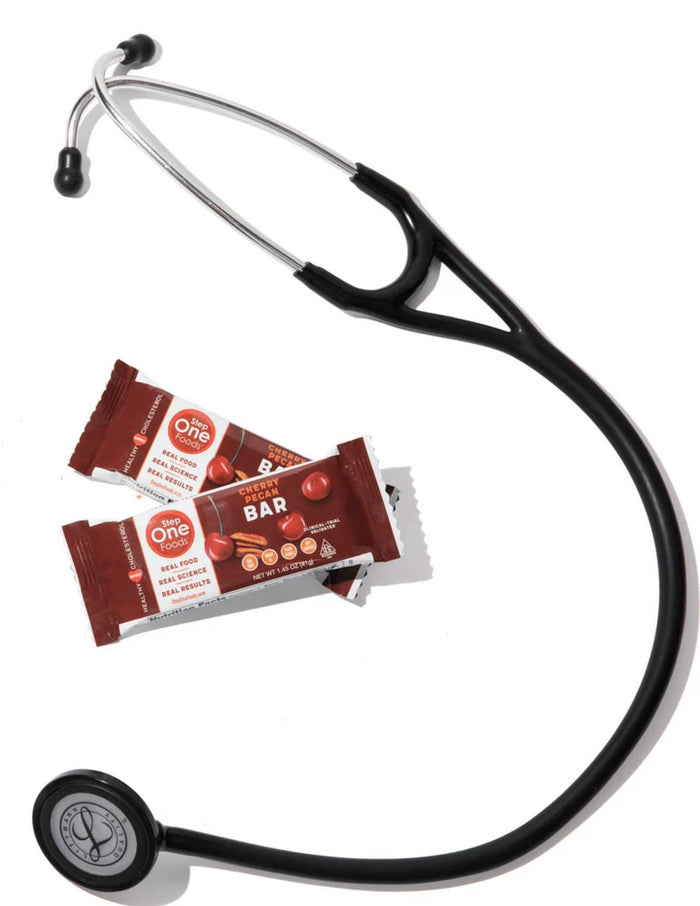
The target matters, though: you need a meaningful amount, on the order of 10 grams of added prebiotic fiber a day, and most people fall dramatically short. This is precisely the gap Step One Foods was built to close — two servings a day deliver at least 10 grams of whole-food fiber, enough to help your body do naturally what these drugs do artificially.
What's the simplest way to eat like this?
The best dietary advice I've ever come across is seven words long, from Michael Pollan, and it has only become more relevant in the era of GLP-1 drugs:
"Eat food. Not too much. Mostly plants."
Only "eat food" needs explaining. Pollan means real food — the kind your great-grandmother would recognize as food. She wouldn't recognize most of what fills a modern grocery store, and she certainly wouldn't recognize anything built around artificial sweeteners. The beauty of the rule is that it does the work for you: it automatically strips out the things that suppress GLP-1 and interfere with weight loss, and automatically brings in the fiber-rich foods that raise GLP-1 and build health.
It has one more advantage — it lowers your calorie intake without calorie counting. Whole, plant-rich foods are fiber- and nutrient-dense but calorie-light, so you can eat satisfying volumes while naturally taking in less. Add some movement and the math tips further: a daily two-mile walk burns around 200 calories, and trading an eight-ounce steak for a cup of beans saves roughly 400 more. This path is harder than a weekly injection, at least at first, and the weight comes off more slowly. But it delivers better overall health, avoids the medication side effects, and gives you a genuine shot at keeping the weight off for good.
The bottom line
GLP-1 drugs are novel and effective, and they produce eye-popping results. But they don't address the root cause of the conditions they're used to treat, and they carry real downsides — my honest prediction is that in the end we'll find they don't cure a thing. The durable answer was never going to come from a syringe. It comes from feeding your body the food it was built to run on, and letting it make the GLP-1 you need on its own. That's the whole idea behind Step One.
If you're new to this site and found this useful, I write one of these evidence-based articles every week. You can get them in your inbox by joining my email list at the bottom of this page. No spam, no requirement to buy anything, just practical knowledge.
The Science Behind It
Tested & Proven Results.
- Cardiologist formulated
- Supported by over 500 publications
- Clinically-proven, in a double-blind randomized trial with Mayo Clinic and The University of Manitoba
80% of participants lowered their cholesterol in just 30 days. With just two servings per day, Step One Foods offers a proven-effective way to naturally lower LDL (bad) cholesterol.
Try Step One Foods Today!