For many crops and many nutrients, the unfortunate answer is yes.
A new report, Hollow Harvests, has pulled together six decades of data on what's actually inside the food we grow. And the news is not good. We appear to have become extraordinarily good at producing calories, but steadily worse at packing nutrients into them. That matters for everyone, and even more for people who are eating less because they're using a GLP-1 medication.
How much have crop nutrients declined?
Based on various sources of independent evidence, the report estimates that the declines run roughly 20 to 50 percent since the 1960s. And the pattern shows up in crops as different as wheat and apples.
The practical meaning is simple. If a carrot contains half the potassium it once did, you need to eat twice as many carrots to get the same amount.
Why are crops less nutritious today?
Mostly because we have bred and fertilized them relentlessly for yield. Grain outputs per acre of farmland have more than doubled since the 1960s. Plants can build starch and bulk faster than their roots can pull minerals from the soil, so the bigger harvest carries the same minerals spread across more food. In other words, our farming methods are causing nutrients to be diluted.
In addition, the report states that about a third of the world's soils are moderately to highly degraded, which limits the minerals available to crops in the first place. And there's no incentive to consider nutrient density. Farmers are paid by the ton, not by the nutrient, so nothing in the system pushes back.
If food is less nutritious, why haven't we noticed?
Because we have been eating more of it. Global calorie supply is up 38 percent since 1961, and the extra volume has covered much of the shortfall per bite. So we're getting the nutrients we need but at the cost of a worldwide obesity epidemic.
Meanwhile, ultra-processed foods average about 80 percent lower nutrient density than unprocessed whole foods, and they now supply more than half the calories in in our diets. Diluted crops, further diluted in the factory, end up as most of what many people eat.
I've actually often wondered whether one of the drivers of obesity is our bodies' need to obtain the nutrients it needs - and to keep eating until the nutrient need is met. Eat highly processed foods and inevitably end up eating more calories as your body searches out things like potassium and fiber.
What does this mean for people taking GLP-1 medications?
When you eat less, every bite has to carry more. GLP-1 drugs reduce food intake by roughly 16 to 39 percent, which removes the calorie cushion that has been hiding the nutrient decline. One small study cited in the report found that 98 percent of people on these medications fell below the recommended intake for potassium, 90 percent for magnesium, and 88 percent for iron. That finding is preliminary, and those participants likely weren't eating well before they started the drug. But the logic holds: smaller portions of nutrient-diluted food deliver less nutrition.
How can you get more nutrition from less food?
Choose foods where the nutrients are concentrated rather than diluted. Whole, minimally processed foods such as nuts, seeds, legumes, whole grains, fruits, and vegetables still deliver far more nutrition per calorie than refined and ultra-processed foods, even with today's crops. Building meals around them is the most reliable way to close the gap. Fiber is a good place to start, since most Americans get only about half of what they need.
None of us can fix the soil from our kitchens. We can choose the foods that make each serving count.
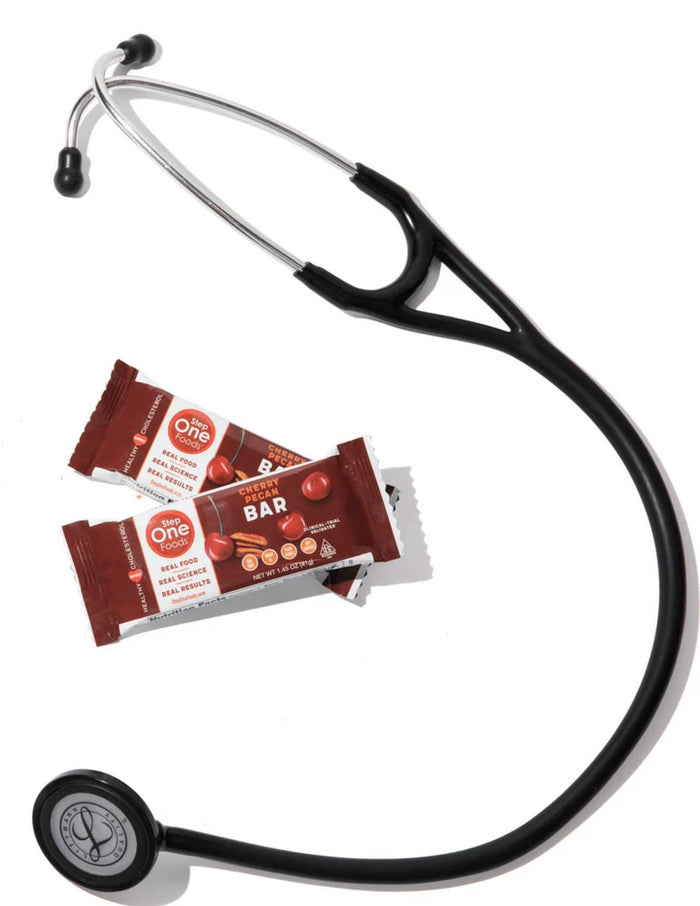
How does Step One Foods concentrate nutrients?
By starting with the dose and working backward. When I designed Step One Foods, the question was never what tastes good with a little fiber added. It was how much soluble fiber, plant sterols, omega-3 ALA, and antioxidants a serving needs to deliver to lower LDL cholesterol, and which whole foods could deliver those amounts in a reasonable portion. The answer was ingredients like oats, flaxseed, walnuts, chia, almonds, and berries, combined so that every serving provides 5 grams or more of fiber, 1,000 mg of omega-3 ALA, and 1,000 mg of plant sterols.
There are no fillers. Nothing is added to bulk up the food or stretch the recipe, so the nutrients that come from the field aren't diluted further on the way to you. Because the ingredients are whole nuts, seeds, and grains, they also bring along minerals like magnesium and potassium, the same nutrients the report worries about most.
Step One can't undo what has happened to crops. The oats and walnuts we use are grown under the same pressures as everyone else's. What we can do is concentrate the most useful whole-food ingredients into each serving, and then test the result. In a double-blind, randomized crossover trial conducted at Mayo Clinic and the University of Manitoba, two servings a day lowered LDL cholesterol by an average of 8.8 percent in 30 days.
When it comes to Step One, you can be confident that the nutrients are there and that they're doing the work.
If you're new to this site and found this useful, I write one of these evidence-based articles every week. You can get them in your inbox by joining my email list at the bottom of this page. No spam, no requirement to buy anything, just practical knowledge.


From Dr. KlodasFood, but with a
Try Step One Foods Today
Food, but with a
medical degree.
I built Step One Foods for my patients. Two servings a day replace the breakfast and snack you already eat.
Tested in a double-blind, randomized crossover trial conducted at Mayo Clinic and the University of Manitoba, 80% of participants lowered their LDL in 30 days.
Your first order is backed by our money-back guarantee.