When it comes to LDL cholesterol, we have understood for a very long time that lower is better and associated with lower heart disease risk. But how low LDL numbers should go had not been well defined.
For a while, cholesterol management guidelines didn’t even provide a goal number! Just how much statin to put people on: a modest dose for people at modest risk of developing heart disease and a high dose for people with known heart disease or at high risk for developing it.
Given that everyone responds to statins in their own way, the numeric LDL results from one size fits all drug dosing were variable too. But so long as the number was lower from where you started, and you were on the “right dose” of a statin based on your risk level, we were happy.
But as time went on, we’ve learned much more about what different LDL numbers mean. Around 100 mg/dL, we expect the pace of developing plaque build up to slow markedly. At 70 mg/dL we expect plaque build up to halt. And at 55 mg/dL we expect some plaque regression. LDL is a continuous variable so these targets are approximations when applied to individual patients, but you get the idea: lower LDL = less plaque.
And this is what the latest guidelines now want doctors to achieve. 100 mg/dL for everyone. 70 mg/dL for those with risk factors for heart disease. And 55 mg/dL for those with known heart disease. (They also advise getting your Lipoprotein A checked once in your life.)
So how's the country actually doing against that new bar?
A new study analyzing national health data found that nearly one in three U.S. adults without heart disease now have LDL cholesterol above the goals set by this year's updated cholesterol guideline, and about three in four of those people are getting no cholesterol-lowering treatment at all.
Why Are So Many People Off Target and Untreated?
It’s probably a few things stacking on top of each other.
The target moved, and somebody has to actively recheck your number against it, which doesn't happen automatically just because a guideline was published. Starting or adjusting a medication takes a visit, a conversation, and a follow-up lab. And that takes time. And a pro-active healthcare system. That’s a lot of barriers.
An awareness gap is almost certainly at play as well. If patients don’t know the targets are different now, they’re not likely to reach out to be checked.
Plus, getting to an LDL of 100 mg/dL is unlikely unless you’re eating in a way to support healthy cholesterol levels. So we’re not necessarily being under-treated, we’re being under-nourished. By the way, if you want the fuller argument for why I think this guideline still leans too hard on drugs and not nearly hard enough on food, I made that case earlier this year.
What Should You Actually Do About This?
At your next physical, ask what your actual LDL number is - not just whether your cholesterol was "fine" on the printout. Then ask the more specific question: what's my LDL target, given my risk, and am I where I need to be? If the answer is no, ask what the plan is to get you there. That's not being difficult. That's the exact conversation this new guideline was written to prompt.
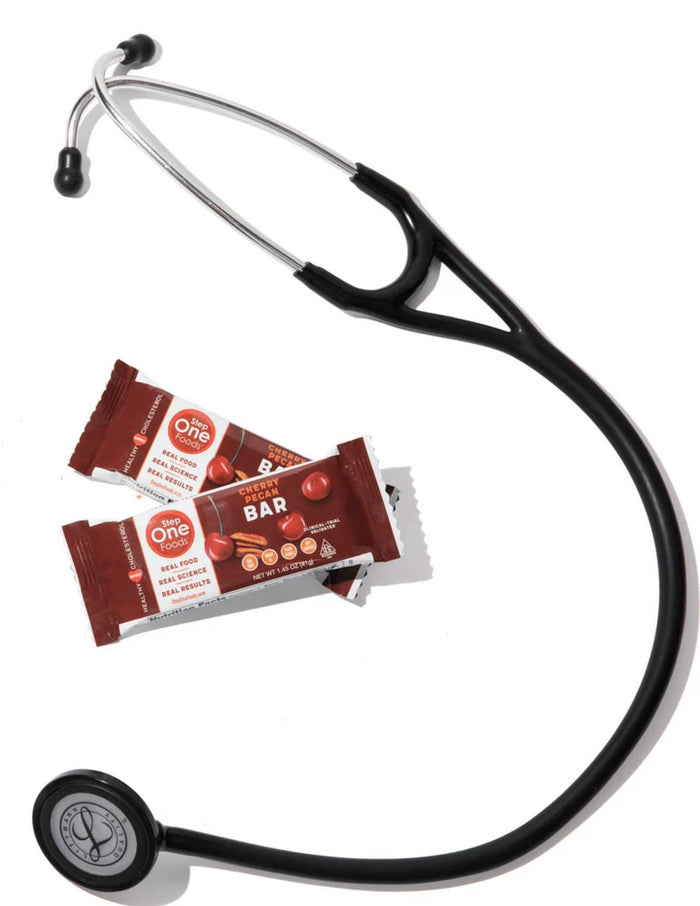
But you don't have to wait for that conversation to start doing something. This is exactly the kind of gap I built Step One Foods to help close: food formulated around soluble fiber, plant sterols, antioxidants, and unsaturated fats, aimed at the number the guideline is about.
It's not a substitute for figuring out whether you also need medication. But it's a start you don't have to wait on. And it just might help you avoid the medication conversation altogether.


The Science Behind It
Tested & Proven Results.
- Cardiologist formulated
- Supported by over 500 publications
- Clinically-proven, in a double-blind randomized trial with Mayo Clinic and The University of Manitoba
80% of participants lowered their cholesterol in just 30 days. With just two servings per day, Step One Foods offers a proven-effective way to naturally lower LDL (bad) cholesterol.
Try Step One Foods Today!