Updated July 2026
For years, the case against ultra-processed food rested on an association: people who ate more of it got sicker. What we didn't fully understand was why. That's changing fast, and the emerging answer is worse than "they're just junk with too much sugar and salt." Something about the processing itself appears to be doing harm.
How much ultra-processed food are we actually eating?
Far more than most people realize. Ultra-processed foods now account for about 57% of the calories adults eat in the United States, and roughly 67% of what children eat. By ultra-processed, I don't just mean the obvious junk like chips, soda, and candy. The category also includes many breakfast cereals, packaged breads, and plenty of products marketed as healthy. These foods tend to be calorie-dense but nutrient-poor: high in sugar, sodium, and refined fats, low in fiber and micronutrients.
What does the evidence actually show?
A remarkably consistent link to disease and early death. Studies now tie high UPF intake to heart disease, type 2 diabetes, several cancers, depression, and higher mortality from nearly every major cause. A 2025 meta-analysis found a straight-line dose-response between UPF intake and all-cause mortality: the more you eat, the higher the risk, with no apparent safe threshold.
A separate 2025 study of over 400,000 Europeans found higher intake raised the risk of dying from heart disease specifically. Most telling of all, these associations often persist even after researchers adjust for salt, sugar, and fat, which suggests the harm isn't fully explained by the nutrition facts. Something about the processing and the additives seems to matter on its own.
Is it the additives?
Increasingly, the evidence says yes, at least in part. This was the open question a few years ago, and the long-running NutriNet-Santé study in France, tracking well over 170,000 people, was built partly to answer it by estimating exposure to hundreds of food additives. It has started delivering. In 2024, that data linked specific emulsifiers, the additives that keep processed foods smooth and stable, to a higher risk of type 2 diabetes.
Researchers believe a key mechanism runs through the gut: emulsifiers, artificial sweeteners, and other additives appear to disrupt the microbiome, reducing beneficial bacteria and promoting inflammation, which in turn feeds heart disease, metabolic disease, and weight gain. A few years ago I wrote that my hunch was researchers would find additives wreaking havoc in our bodies. That hunch appears to have been prescient.
Even setting additives aside, there's a simpler problem.
Ultra-processed foods crowd out the good stuff. After all, there's only so much room in your stomach. So every 500 calories of engineered snack food is crowding out the potential 500 calories from vegetables, beans, fruit, nuts, or whole grains. The end result is that even in the best case, where a particular additive turns out to be harmless, a diet dominated by UPFs is doing damage by displacement, starving you of the fiber, micronutrients, and protective compounds that whole foods provide.
The concern is now serious enough that in 2026, European cardiology societies issued a formal consensus statement urging physicians to counsel patients on reducing ultra-processed food intake, treating it as a genuine cardiovascular risk factor.
A food writer's blunt verdict.
Sometimes it takes a non-scientist to say it plainly. In his book Animal, Vegetable, Junk, food writer Mark Bittman traces how we got here, back to the 1950s, when the American Heart Association first warned that diet was linked to artery-clogging plaque but pinned the blame on fat alone, leaving sugar out of the conversation. Sugar intake soared, especially after high-fructose corn syrup arrived in the 1970s. As home cooking declined, sodium climbed alongside fast food, and Americans gained nearly 20 pounds on average between 1970 and 2000, getting sicker as they did.
Bittman's description of ultra-processed food is one of the most damning I've seen: "engineered edible substances, barely recognizable as products of the earth." Given what they do to the body, it's also pretty accurate. His larger point is that our overwhelming preference for these foods is not a failure of willpower. Companies engineered cheap, hyper-palatable food and we never really stood a chance. This is a systemic problem requiring systemic fixes - from farm subsidies for real food on down.
So what can you do about it yourself?
Shift your stomach content ratio toward real food, one choice at a time. You don't have to eat perfectly, and you don't have to overhaul your life overnight. Every time you swap an ultra-processed item for a whole or minimally processed one, you lower your exposure to whatever these additives are doing and you add back the nutrients you'd otherwise miss.
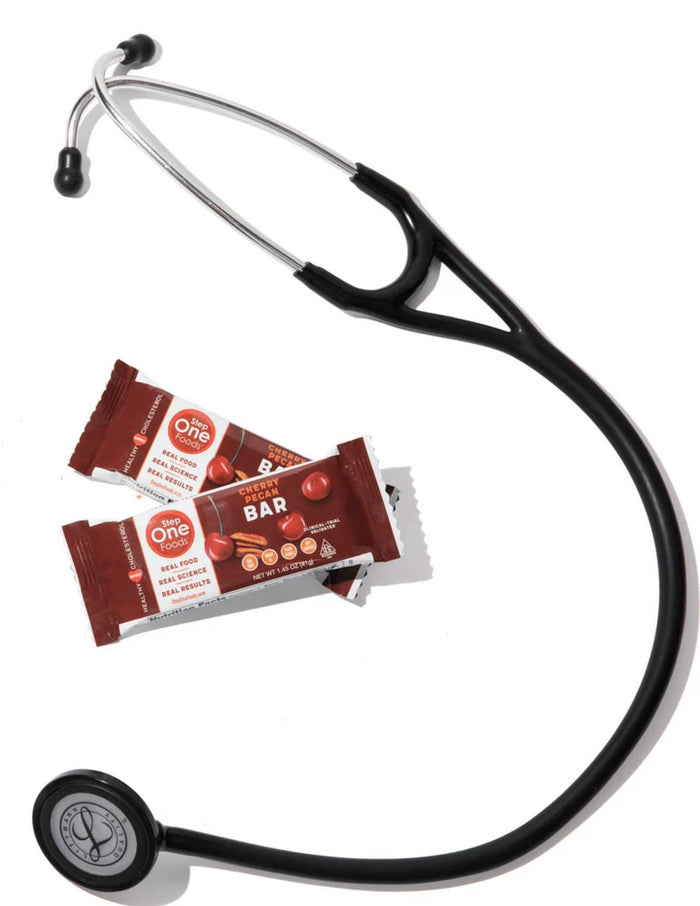
That's the entire idea behind Step One Foods: real, whole-food ingredients with zero artificial additives, built to make the healthy choice the easy choice at least a couple times per day. For the fuller taxonomy of what counts as ultra-processed, see the difference between processed and ultra-processed foods.
If you're new to this site and found this useful, I write one of these evidence-based articles every week. You can get them in your inbox by joining my email list at the bottom of this page. No spam, no requirement to buy anything, just practical knowledge.


The Science Behind It
Tested & Proven Results.
- Cardiologist formulated
- Supported by over 500 publications
- Clinically-proven, in a double-blind randomized trial with Mayo Clinic and The University of Manitoba
80% of participants lowered their cholesterol in just 30 days. With just two servings per day, Step One Foods offers a proven-effective way to naturally lower LDL (bad) cholesterol.
Try Step One Foods Today!