How to Lower LDL
E
Elizabeth Klodas, MD, FACC
· 5 min read
A cardiologist's plain English breakdown of what causes high cholesterol, the various treatments available, and the foods and supplements that can help.
No spam. Unsubscribe anytime.
Your Cholesterol Lowering Guide is confirmed — it'll be in your inbox in the next few minutes.

Updated July 2026
LDL, or low-density lipoprotein, is the cholesterol that parks in your arteries and builds up into blockages. It is also toxic to the delicate lining of your arteries, which raises your risk of a heart attack or stroke. This is why LDL is the main target when we treat someone with heart disease or at high risk for it. So keeping it low matters. Here is how.
It depends on your risk, and the targets moved lower in 2026. Under the current ACC and AHA guidelines, the goal is an LDL under 100 mg/dL for the general population, under 70 if you carry added risk factors, and under 55 if you already have heart or vascular disease. Reaching the low end of that range is hard to do with lifestyle alone, and many people need cholesterol-lowering medication to get there. But lifestyle still does a great deal, and it is where everyone should start.
With the same habits that keep the rest of your cholesterol profile healthy, namely a good diet, regular exercise, and a healthy weight. A healthful lifestyle improves your numbers no matter which cholesterol particle you are looking at. For a practical, step-by-step version, see my guide to how to lower cholesterol naturally.
Not the way most people assume. Trimming cholesterol helps a little. Cutting saturated and especially trans fat helps more. But the biggest lever is reducing simple and processed carbohydrate intake, especially white bread and bagels, white rice, cakes, cookies, candy, as well as sugar-sweetened beverages and juices.
In fact, some of the worst cholesterol profiles I have ever seen were in people eating a low-fat, low-cholesterol, but high-processed-carb diet. Here is why. All carbohydrates are digested and absorbed as sugar. Simple, processed carbohydrates are easily broken down, so they're digested quickly and absorbed quickly, leading to a glucose spike in our bloodstream. This leads to an insulin spike. And insulin drives the enzyme in the liver that produces LDL, leading to higher LDL levels. So eat a heavily processed, simple carbohydrate diet and be rewarded with a high LDL.
That does not mean you should go low-carb. Two of the most powerful tools for lowering LDL, fiber and plant sterols, only come packaged inside carbohydrate-containing foods.
They hijack your body's own cholesterol recycling. Every time you eat, your liver releases bile into your digestive tract, and bile is rich in cholesterol that your body made from circulating LDL. Bile is essential for digesting food, and some of it is used up in that process, creating an elimination pathway for LDL, which was used to make the bile in the first place.
However, because we are efficient organisms, any bile that is not used up in digestion gets reabsorbed and reused, meaning we don't need much LDL coming back to the liver to make bile for the next meal. The corollary is that anything that blocks bile reabsorption will force the liver to pull more LDL out of your blood to make the next batch of bile, dropping circulating LDL levels.
That is exactly what fiber and plant sterols do.
We cannot digest fiber, so a bile molecule is wasted trying to digest it while passing by the reabsorption sites.
Plant sterols are natural plant components that are structurally similar enough to bile cholesterol to fool the body into thinking they are bile cholesterol, but just different enough that they cannot get absorbed. They end up occupying bile absorption sites, preventing actual bile cholesterol from being absorbed, so more bile is wasted.
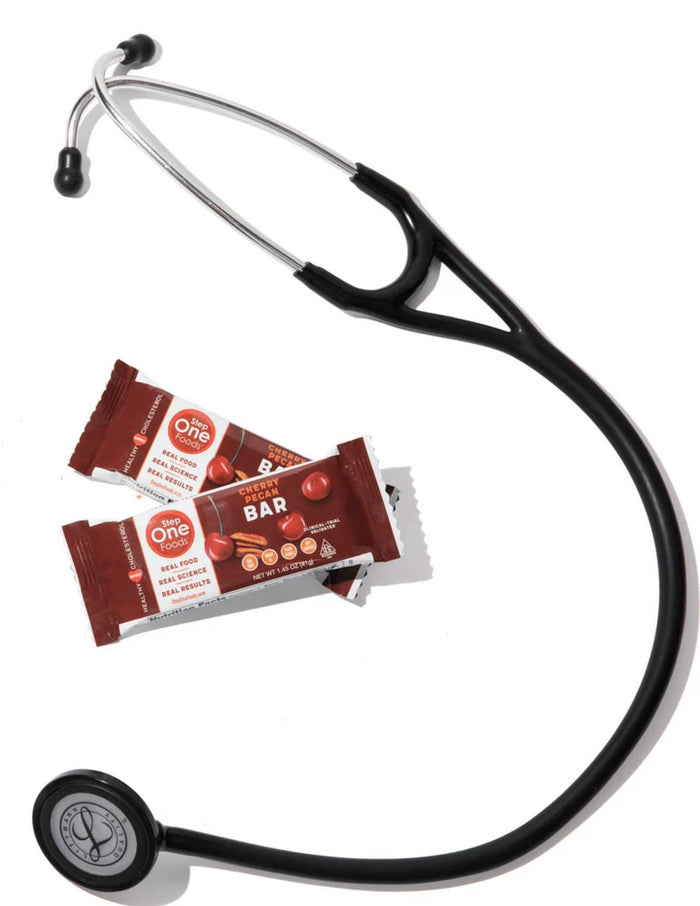
This is why people eating a whole-food, plant-based diet, which is naturally high in fiber and plant sterols, have lower LDL readings. It is also the idea Step One Foods is built around.
A great deal, as long as the changes are the right ones. In our randomized controlled trial, conducted with Mayo Clinic and the University of Manitoba, the right foods lowered LDL in 80 percent of participants in 30 days, some by as much as a drug, with only a small dietary change. If you're wondering about the timeline in more detail, I've written a full post on how long it takes to lower cholesterol.
There are exceptions, but they are unusual. Once in a while I see a patient whose LDL will not budge no matter how pristine their habits are. That usually indicates a genetically driven LDL elevation. An LDL that starts very high, especially above 190, tends to be inherited, and may even represent a condition called familial hypercholesterolemia. Most of those patients will need medication to reach their goal.
Of all the cholesterol particles, LDL is the easiest to lower with medication, especially statins like atorvastatin (Lipitor) and rosuvastatin (Crestor). But a pill is not a substitute for how you eat and live. In fact, the better your habits, the better those drugs work, which often means you can reach your goal on a lower dose.
We do not lower LDL to make a number look good. We lower it to reduce the risk of heart disease. That is why we will put a patient who already has heart disease on a statin even when their LDL looks normal, and why a clean coronary calcium scan can let someone with a high LDL safely avoid medication, at least temporarily. Eating well, moving, not smoking, and reaching a healthy weight all lower LDL, and just as importantly, they cut your heart risk in ways that go well beyond the cholesterol number.
If you're new to this site and found this useful, I write one of these evidence-based articles every week. You can get them in your inbox by joining my email list at the bottom of this page. No spam, no requirement to buy anything, just practical knowledge.
I built Step One Foods for my patients. Two servings a day replace the breakfast and snack you already eat.
Tested in a double-blind, randomized crossover trial conducted at Mayo Clinic and the University of Manitoba, 80% of participants lowered their LDL in 30 days.
Your first order is backed by our money-back guarantee.