Updated July 2026
To prevent outright deficiency, adults need about 0.8 grams of protein per kilogram of body weight a day, roughly 50 grams for someone who weighs 140 pounds. As a rule of thumb, the Institute of Medicine puts it at about 46 grams a day for women and 56 for men. You can hit that in a single modest meal: a piece of tilapia, a cup of cooked quinoa, and a couple of cups of kale sauteed with sunflower seeds gets you there.
But preventing deficiency and optimizing health aren't the same thing. The real question, especially as we get older, is whether eating even more protein protects against the muscle loss that tends to come with age.
Does eating more protein build more muscle?
Not on its own. Harvard researchers randomized older men to either the recommended 0.8 g/kg or a higher 1.3 g/kg per day. After six months, neither group gained meaningful muscle mass, strength, or physical performance, even when testosterone was added. Extra protein simply wasn't the magic bullet.
The reason is that your DNA, not your plate, controls how much protein your body puts to use, and without the signal of exercise it won't tell your muscles to grow. In another study, older women supplemented with protein daily for two years saw no improvement in muscle mass or physical function.
So how much is enough? For people who exercise regularly, 1.2 grams per kilogram a day (about 0.5 grams per pound) is plenty to maintain and build muscle. Even competitive bodybuilders and pro athletes top out around 1.6. And there's no need to obsess, because an athlete eats far more food overall, which brings the extra protein along automatically.
Do you use protein less efficiently as you age?
Yes, and it's the one reason to pay a little more attention. Older bodies are less efficient at turning the protein they eat into muscle, especially below a certain threshold, and studies show higher intake can overcome that deficit. So eating somewhat more protein with age is reasonable.
The catch is that older adults also tend to eat fewer calories overall, which can quietly drag protein intake down with it. That's why it helps to think in terms of the percentage of your calories coming from protein rather than a fixed number. Nutrition experts put the healthy range at 10 to 35% of calories, and aiming toward the higher end as you age keeps your protein intake steady even as your appetite shrinks.
What actually preserves muscle as you age?
Exercise, by a wide margin. Protein matters for maintaining muscle, and you may need a bit more of it later in life, but its importance pales next to regular movement. For older adults, resistance training is the single most effective way to build and keep muscle, far outweighing anything you'd gain from an extra scoop of protein.
Can you eat too much protein?
Yes. Too much of any good thing has a cost, and a growing body of evidence links high protein intake to worse longevity, with higher rates of cancer and other chronic disease. Researchers in the longevity field argue for keeping protein near 0.8 g/kg for most of adult life, nudging up to about 1.0 after 65.
There's also a simpler problem. When you eat more protein than your body needs, the leftover amino acids don't vanish. They get converted into sugar and fat, which is why loading up on protein, without cutting calories, doesn't deliver the weight loss or blood-sugar control people expect.
What's the simplest way to get enough?
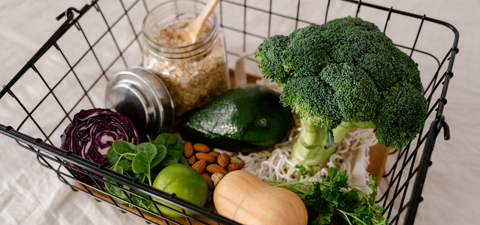
Stop counting. You don't need to track grams, eat cottage cheese by the tub, or drink a shake at every turn. Protein is in almost everything, including every whole plant food. Calorie for calorie, broccoli has nearly as much protein as beef, about 8 grams per 100 calories versus 11 for lean ground beef. The difference is just that you'd eat a small amount of beef and a large amount of broccoli to reach the same calories.
And if you've heard that plant proteins are "incomplete" or must be combined just so (think rice and beans), those myths were debunked years ago.
Honestly, we've overcomplicated this. There's no hidden secret to staying strong, and it isn't all about protein. Eat a whole-food, plant-centric diet with enough calories and you'll get plenty of protein. Move your body every day and you'll keep, even build, muscle. It really is no more complicated than that.
If you're new to this site and found this useful, I write one of these evidence-based articles every week. You can get them in your inbox by joining my email list at the bottom of this page. No spam, no requirement to buy anything, just practical knowledge.


The Science Behind It
Tested & Proven Results.
- Cardiologist formulated
- Supported by over 500 publications
- Clinically-proven, in a double-blind randomized trial with Mayo Clinic and The University of Manitoba
80% of participants lowered their cholesterol in just 30 days. With just two servings per day, Step One Foods offers a proven-effective way to naturally lower LDL (bad) cholesterol.
Try Step One Foods Today!