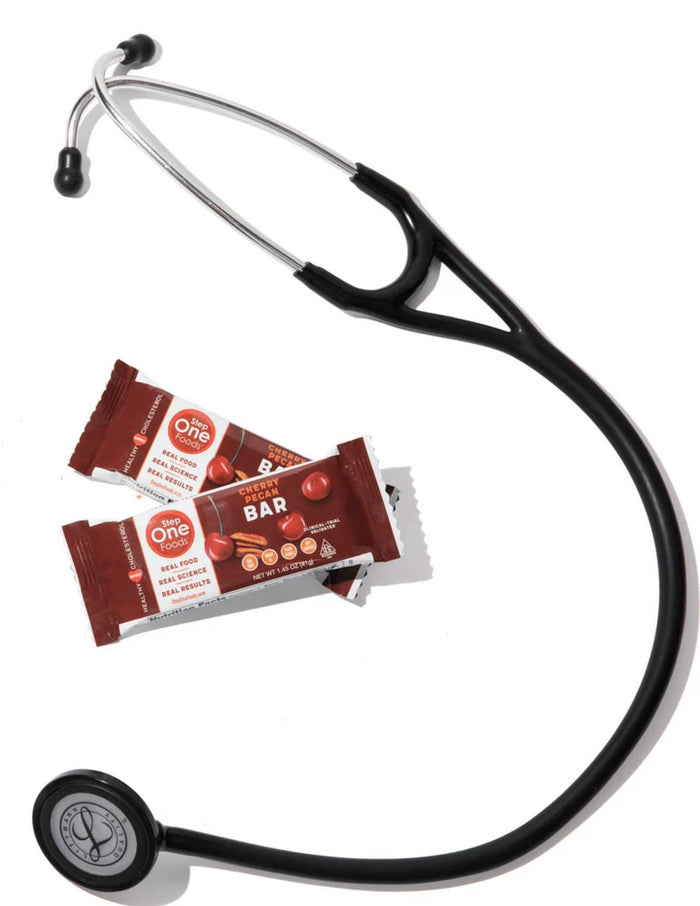
Updated July 2026
People are often surprised that a food can lower cholesterol the way a medication does. The reason it works comes down to biology: high LDL cholesterol is driven by a few distinct mechanisms in the body, and Step One Foods is formulated to work on all of them at once. Here's exactly how, mechanism by mechanism.
Why is your LDL cholesterol high in the first place?
There are three main reasons circulating LDL, the harmful cholesterol, climbs too high:
We make too much of it in the liver.
We eliminate too little of it through the biliary system.
We clear too little of it out of the bloodstream.
Most cholesterol medications target just one of these. What makes food different, and Step One in particular, is that the right foods work on all three at the same time. Let me take them one at a time, because understanding the mechanisms is what makes the food-as-medicine idea click. (For the deeper dive on the root causes, see what causes high LDL cholesterol.)
How does Step One work through the biliary system?
This is where Step One has its biggest impact for most people, so it's worth understanding. You have a natural elimination pathway for LDL that runs through bile. Bile, the substance your body uses to digest food, is made from cholesterol. So picture a funnel: LDL is pulled from your bloodstream to the liver, turned into bile, dumped into your small intestine to help digest a meal, and ultimately carried out of the body in stool.
The catch is that not all bile gets eliminated. Many of us are biologically frugal, reabsorbing whatever bile isn't used up during digestion. That recycling means the liver doesn't need to pull much LDL from the blood to make the next batch, which effectively shrinks the funnel and keeps circulating LDL high. Step One Foods interrupts that recycling in two ways: fiber traps bile in the digestive tract, and plant sterols lower how much bile cholesterol gets reabsorbed. Less reabsorption means the liver has to pull more LDL out of your bloodstream to make fresh bile, and your LDL falls.
Here's a detail I love, because it shows this isn't fringe science: this is the exact mechanism behind the original cholesterol-lowering drugs. They were called bile acid sequestrants, and some readers will remember names like Questran and Welchol. They physically bound bile in the gut so it couldn't be reabsorbed, and they worked, LDL fell. The problem was practical: they were messy powders or meant swallowing six to eight pills a day, and they often caused digestive upset, so they fell out of favor once statins arrived. But the underlying mechanism was sound, and it's one that food reproduces gently, through fiber and plant sterols, no powder required.
How does Step One work on cholesterol production in the liver?
By calming the enzyme that drives it. Cholesterol production in the liver is controlled by an enzyme called HMG-CoA reductase, the very enzyme statins block. But that enzyme has another lever: insulin. When insulin runs high, HMG-CoA reductase revs up and the liver pumps out more LDL. Step One delivers its complex carbohydrates in a high-fiber package, which blunts the insulin spike after eating, quiets that enzyme, and helps bring LDL down. It's a gentler version of what a statin does, arrived at through food.
How does Step One help clear LDL from the bloodstream?
By supporting the receptors that remove it. Before LDL can leave your blood, it has to latch onto an LDL receptor. Those receptors become more active in the presence of unsaturated fats, especially the omega-3 fatty acids that Step One Foods is rich in. More receptor activity means more LDL pulled out of circulation. Interestingly, this is the same end goal as the newest cholesterol drugs, the PCSK9 inhibitors like the injectables Repatha and Leqvio and the newer oral option, Lipfendra, which keep more LDL receptors available to do their job. Food nudges the same system in the same direction.
So why choose food over a fistful of drugs?
Because food does in one step what would otherwise take several prescriptions. Think about what it would take to hit all three mechanisms pharmacologically: a statin like Lipitor for the liver enzyme, something like Welchol to block bile reabsorption, a PCSK9 inhibitor like Repatha to boost receptor clearance, and then still more drugs to manage the blood pressure, blood sugar, and weight that so often travel with high cholesterol. Or you can just eat food, a single complex, bioactive package that works on all of it at once.
I'll be honest about the tradeoff: food alone usually won't drive your LDL to the spectacularly low numbers that high-dose drug combinations can achieve. But it will get you to meaningfully better LDL, and it does something no drug can, it improves your blood pressure, blood sugar, weight, and inflammation at the same time, because you're treating the root cause rather than one number. This isn't just theory. In our randomized controlled trial, conducted with Mayo Clinic and the University of Manitoba, the right foods lowered LDL in 80 percent of participants in 30 days, some by as much as a drug, with only a small dietary change.
That's the whole idea behind Step One Foods: work with your body's own cholesterol machinery, on every front at once, through food you actually want to eat.
If you're new to this site and found this useful, I write one of these evidence-based articles every week. You can get them in your inbox by joining my email list at the bottom of this page. No spam, no requirement to buy anything, just practical knowledge.
The Science Behind It
Tested & Proven Results.
- Cardiologist formulated
- Supported by over 500 publications
- Clinically-proven, in a double-blind randomized trial with Mayo Clinic and The University of Manitoba
80% of participants lowered their cholesterol in just 30 days. With just two servings per day, Step One Foods offers a proven-effective way to naturally lower LDL (bad) cholesterol.
Try Step One Foods Today!