For most healthy adults, an LDL cholesterol under 100 mg/dL is considered normal, but the honest answer is that your ideal number depends on your personal risk, and the target moves lower the higher your risk climbs.
In March 2026, the American College of Cardiology and the American Heart Association released new cholesterol guidelines that brought back specific LDL goals, and they set the bar significantly lower than previous recommendations. Here is what the numbers mean for you.
What is a normal LDL cholesterol level?
As a general rule, when it comes to LDL, the lower the number the better. That is because LDL is a cumulative risk factor. The higher the number, and the longer your arteries are exposed to it, the more likely you are to accumulate plaque. That is why under 100 mg/dL was chosen as the new goal, because at that level, the pace of plaque buildup is expected to slow markedly.
The important caveat in the 2026 guidelines is that your LDL goal is not necessarily static. It is set by your overall risk of a heart attack or stroke, and for a growing number of people, the target sits well below 100.
What should my LDL be if I am at higher risk or have heart disease?
If you are at high risk, the goal drops to under 70 mg/dL, and if you already have cardiovascular disease and are considered very high risk, it drops to under 55 mg/dL. "High risk" and "very high risk" are not guesses. They are based on things like a prior heart attack or stroke, stents or bypass surgery, diabetes, chronic kidney disease, familial hypercholesterolemia, or a combination of risk factors that add up. The more risk you carry, the more benefit you get from pushing your LDL down, which is why the target tightens as your risk rises.
When should I start having my LDL checked, and how often?
Because lower for longer is better, the guidelines advocate screening all children around age 10. In children from families affected by familial hypercholesterolemia (an inherited condition that causes very high LDL) or with a marked family history of early, aggressive coronary artery disease, screening as early as age 2 is advised. After that, a recheck at age 19 and every 5 years thereafter is recommended.
I personally follow an easier-to-remember version of this: once at around age 10, twice in your twenties, three times in your thirties, four times in your forties, five times in your fifties, and then yearly after that.
This all assumes your cholesterol is normal at each check. If it is elevated at any point, the schedule needs to be adjusted to your individual circumstances.
Is LDL the only number that matters?
No, and this is one of the biggest changes in the new guidelines. Two other tests are getting more attention. The first is ApoB, which gets at the actual number of cholesterol particles that can lodge in your artery walls, and it can reveal risk that a normal-looking LDL sometimes hides. The second is lipoprotein(a), or Lp(a), an inherited risk factor for earlier, more aggressive plaque formation that most people have never had measured. It is worth asking your doctor to check your Lp(a) at least once in your life, since it can change how aggressively you and your doctor decide to manage everything else.
How can I lower my LDL cholesterol?
An LDL goal under 100 mg/dL will put far more people into a category where medications might start to be considered. If you are in your 30s, that could mean 50 or more years on a drug. So doing everything you can to lower your LDL without medication becomes essential.
The most powerful lever most people never fully pull is food. A few changes do the heavy lifting:
- Eat more soluble fiber, from foods like oats, beans, barley, and psyllium, which pulls cholesterol out of your system.
- Get phytosterols, plant compounds that block cholesterol absorption and can lower LDL by around 10% at the right dose.
- Prioritize omega-3 fats from fish, walnuts, flax, and chia, and unsaturated fats from olive oil and avocado.
- Cut back on saturated and trans fats, the ones that push LDL up.
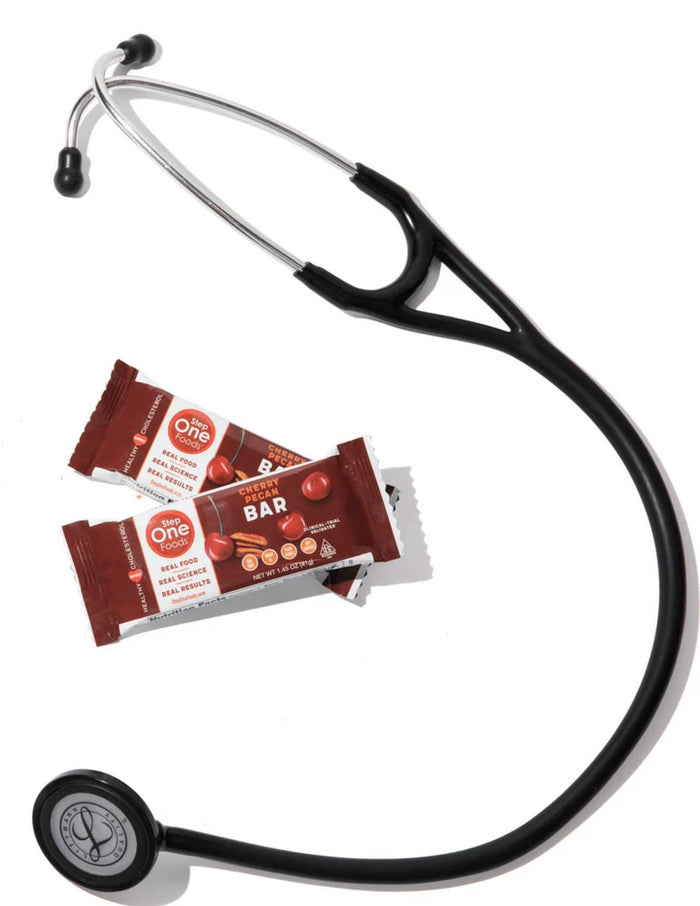
Most people do not get nearly enough fiber, phytosterols, or omega-3s in their diets today, and this is exactly the gap Step One Foods was built to close. Rather than asking you to overhaul your whole diet overnight, we put meaningful doses of the fiber, phytosterols, and omega-3s shown to lower cholesterol into two simple servings a day, and we proved it works in a randomized controlled trial conducted with Mayo Clinic and the University of Manitoba. Food is the foundation, and for many people it is enough to move the number meaningfully.
When food and lifestyle are not enough on their own, medications matter, but they do not supplant a healthy diet. They complement it. Statins are the mainstay, and the 2026 guidelines also point to newer options like ezetimibe, bempedoic acid, and PCSK9 inhibitors when more lowering is needed. The right combination is a conversation to have with your doctor.
So what should your LDL be? The short version is lower than the old rules suggested, tailored to your personal risk, and reached as early as you can. Know your number, know your risk, and remember that what is on your plate is one of the most effective tools you have.
If you're new to this site and found this useful, I write one of these evidence-based articles every week. You can get them in your inbox by joining my email list at the bottom of this page. No spam, no requirement to buy anything, just practical knowledge.


From Dr. KlodasFood, but with a
Try Step One Foods Today
Food, but with a
medical degree.
I built Step One Foods for my patients. Two servings a day replace the breakfast and snack you already eat.
Tested in a double-blind, randomized crossover trial conducted at Mayo Clinic and the University of Manitoba, 80% of participants lowered their LDL in 30 days.
Your first order is backed by our money-back guarantee.