If you've just been told your cholesterol is high and you've decided to do something about it, one of the first questions on your mind is probably: how long is this going to take? The encouraging answer is that cholesterol responds faster than almost any other risk factor we treat, often within weeks, not months or years. But the full answer depends on how you go about lowering it, and understanding the timeline tells you a lot about how cholesterol actually works.
How quickly can cholesterol drop?
Faster than most people expect. Cholesterol isn't like weight, which comes off slowly and grudgingly. Your LDL level reflects what's happening in your liver right now, and your liver responds to change quickly. When you remove the things driving LDL up, or add the things that pull it down, the number starts moving within a couple of weeks, and you'll typically see a meaningful change by the one-month mark.
In our randomized controlled trial, conducted with Mayo Clinic and the University of Manitoba, the right foods lowered LDL in 80 percent of participants in 30 days, some by as much as a drug, with only a small dietary change. Thirty days. That's the kind of timeline we're talking about when the approach is right.
Why does cholesterol respond so quickly?
Because of how your body handles bile. Every time you eat, your liver releases bile into your digestive tract to help digest your food, and bile is rich in cholesterol that your liver made from circulating LDL. Normally, most of that bile gets reabsorbed and reused, so your liver doesn't need to pull much LDL out of your blood to make the next batch. But when you eat foods that block bile from being reabsorbed, like ones full of fiber and plant sterols, your liver is forced to pull more LDL out of your bloodstream to make bile for your next meal. That happens meal after meal, day after day, which is why the effect shows up so fast. You're not waiting on some slow structural change. You're changing what your liver does at the very next meal.
The same speed applies in the other direction. If your LDL is high because of a diet heavy in saturated fat and processed carbohydrates, cleaning that up removes the daily driver, and the number falls in step.
Does it matter how you lower it?
It affects the timeline a little, but less than you'd think. Medication like a statin works quickly too, with most of the effect visible by four to six weeks, which is why your doctor usually rechecks your blood about six to twelve weeks after starting or changing a dose. Food works on a similar timeline, and often a faster one, because you're making the change several times a day.
But the bigger difference isn't speed, it's breadth: a statin lowers LDL and little else, while the right foods lower LDL while also easing blood pressure, steadying blood sugar, calming inflammation, and supporting a healthy weight. Same timeframe, more payoff.
When will you see it on a blood test?
Most doctors recheck cholesterol about 6 to 12 weeks after a change, and that's a reasonable window. If you've genuinely changed how you eat or started a medication, a test at that point will capture the effect. Testing much sooner than about four weeks can undersell your progress, since the number is still settling. My advice is to give any change a solid 6 to 8 weeks before you judge it, then retest.
What if your cholesterol doesn't budge?
Once in a while, it won't, and that's worth knowing about. If you've truly cleaned up your diet and your LDL barely moves, that usually points to a genetically driven elevation. An LDL that starts very high, especially above 190, tends to be inherited, and may even represent a condition called familial hypercholesterolemia. Those individuals aren't doing anything wrong, their bodies simply clear LDL poorly for genetic reasons, and most will need medication to reach their cholesterol goal. But they're the exception. For the large majority of people, the right dietary changes move the number, and they move it quickly.
The bottom line
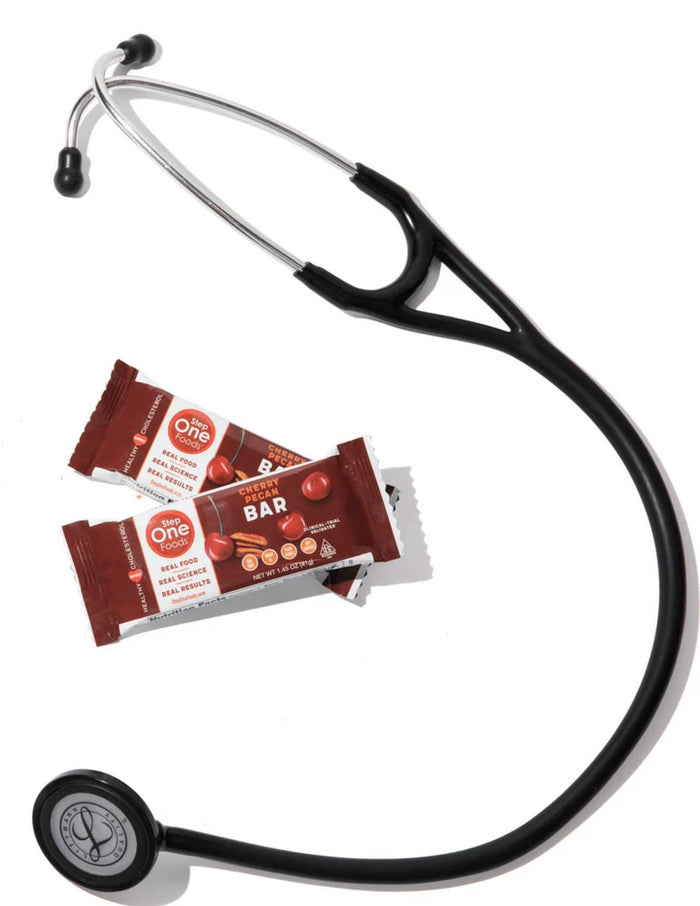
Cholesterol is one of the most responsive risk factors we have. Make the right changes and you can expect to see a real difference within about a month, confirmed on a blood test by the two- to three-month mark. The trick is making changes you can sustain, because cholesterol responds fast, but it also drifts back just as fast if the old habits return. That's the whole idea behind Step One Foods: a small, sustainable daily change that starts working at your very next meal, and keeps working for as long as you keep it up.
If you're new to this site and found this useful, I write one of these evidence-based articles every week. You can get them in your inbox by joining my email list at the bottom of this page. No spam, no requirement to buy anything, just practical knowledge.
The Science Behind It
Tested & Proven Results.
- Cardiologist formulated
- Supported by over 500 publications
- Clinically-proven, in a double-blind randomized trial with Mayo Clinic and The University of Manitoba
80% of participants lowered their cholesterol in just 30 days. With just two servings per day, Step One Foods offers a proven-effective way to naturally lower LDL (bad) cholesterol.
Try Step One Foods Today!