Updated July 2026
Picture this: you wake up early, get in a great sweat at the gym, hit the showers, then grab a bagel and a candy bar on the way to work, figuring you've earned it and surely burned more than the treat contains. It feels logical. It's also exactly why the scale won't budge. If you've been exercising faithfully and not losing weight, you're not doing anything wrong, you're running into some stubborn biology.
Why doesn't exercise lead to weight loss?
Because we almost always eat back the calories we burn, usually without realizing it. A study in the American Journal of Clinical Nutrition found that people on an exercise program tended to compensate by eating roughly 90 to 125 extra calories a day, just a few bites of food, but easily enough to erase the deficit exercise created. As one of the study's authors put it, we fall into an "if I jog now, I deserve that doughnut" mindset. The trouble is that balancing those reward calories is brutally hard: burning off a single extra daily soda over a year would require walking over 500 miles. Exercise creates a smaller calorie deficit than almost anyone expects, and the appetite it stirs up quietly fills the gap.
Can't I just out-exercise a bad diet?
No, and this is the deeper point. Even setting aside the extra calories, exercise does nothing to counteract the quality problems in poor food choices, the sugar, the additives, the ultra-processed ingredients. There's far more to health, and to weight, than calories burned versus calories eaten. This is the same reason you can't outrun your fork: food is simply the more powerful lever.
So is exercise pointless for weight?
Absolutely not, it's just the wrong primary tool for losing. There are fantastic reasons to exercise: it builds fitness and strength, fights stress, lifts mood, protects against dementia, and, importantly, it's essential for maintaining weight loss once you've achieved it. Over time, regular activity raises your basal metabolic rate, making you a more efficient calorie burner, which pays off for the long haul. Exercise is indispensable for staying healthy and keeping weight off. It's just not, by itself, an efficient way to take weight off.
What actually works if weight loss is the goal?
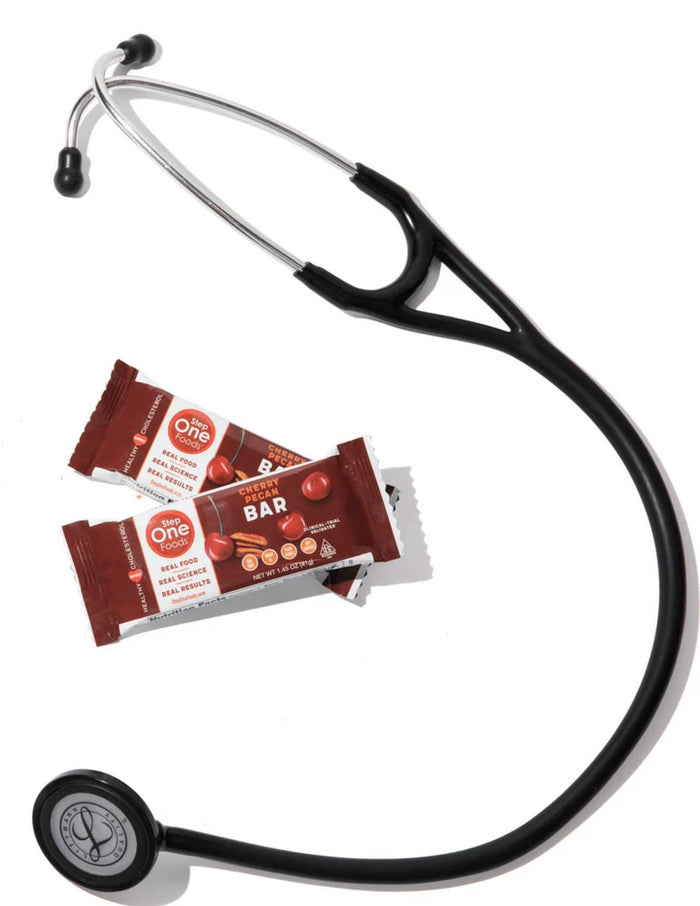
Change what's on your plate first. If your aim is to lose weight, the fastest, most reliable route is diet, not more time at the gym. For example, swapping that morning bagel and candy bar for Step One Foods pancakes and one of our bars cuts about 180 calories a day, enough to lose roughly 18 pounds over a year, no cross-country walk required. My advice to patients starting a workout routine is to pay extra attention to eating during that time, especially if weight loss is the goal: plan your post-workout snack in advance (a peanut butter bar is my go-to), hydrate with water rather than soda, and keep that "walk 500 miles" image in mind as motivation not to unconsciously eat back everything you just burned.
For the bigger picture on how much movement you need and why (weight aside, it's one of the best things you can do for your heart), see how much exercise you actually need.
If you're new to this site and found this useful, I write one of these evidence-based articles every week. You can get them in your inbox by joining my email list at the bottom of this page. No spam, no requirement to buy anything, just practical knowledge.


The Science Behind It
Tested & Proven Results.
- Cardiologist formulated
- Supported by over 500 publications
- Clinically-proven, in a double-blind randomized trial with Mayo Clinic and The University of Manitoba
80% of participants lowered their cholesterol in just 30 days. With just two servings per day, Step One Foods offers a proven-effective way to naturally lower LDL (bad) cholesterol.
Try Step One Foods Today!