Updated July 2026
Most of us, when we think about exercise for the heart, picture cardio: walking, running, cycling. But there's a second kind of exercise that becomes more important with every passing decade, and it's the one people most often neglect. Strength training. Here's why building muscle deserves a place in your routine, especially after 50.
Why does strength matter more as we get older?
Because muscle loss is real, and it accelerates with age. Starting in midlife and speeding up notably after the fifth decade, we steadily lose muscle mass unless we actively work to preserve it. You might be reasonably fit from a cardiovascular standpoint and even quite flexible, yet still not be strong, and strength turns out to matter enormously for how you age. The goal isn't to become a bodybuilder or bench-press your body weight. It's to build the physical resilience that protects you when life throws a health challenge your way.
What does "physical resilience" actually mean?
It's your body's ability to withstand and recover from a health event. One of the clearest lessons I learned when I went from being the doctor to being the patient is how much physical resilience matters when you're facing an illness or an operation. People who enter a health event physically strong recover faster, heal better, and are far more likely to return to full function afterward. Strength, in other words, is insurance you build in advance, before you know you'll need it.
What are the benefits of resistance training?
They reach well beyond the muscles themselves. Building muscle helps with weight control, because pound for pound, muscle burns more calories than fat. Regular resistance training has also been shown to lower blood pressure and improve the cholesterol profile, especially raising HDL ("good") cholesterol, and it's associated with a lower risk of developing insulin resistance and diabetes. And because it loads the bones, strength training helps protect against osteoporosis, much as weight-bearing exercise does, which matters especially for those of us who are smaller-framed and at higher risk of thinning bones.
How do you get started?
However works for you, without pressure to be perfect. You don't have to start on January 1, or map out the whole plan before you begin. Some people do best with a gym or a trainer for accountability, especially at the start; others do fine with the many reputable "get started at home" routines available online. The point isn't Olympic gold. It's better muscle tone, more resilience, and the health benefits that come with them. Aim for the general guideline of muscle-strengthening activity on at least two days a week, working the major muscle groups.
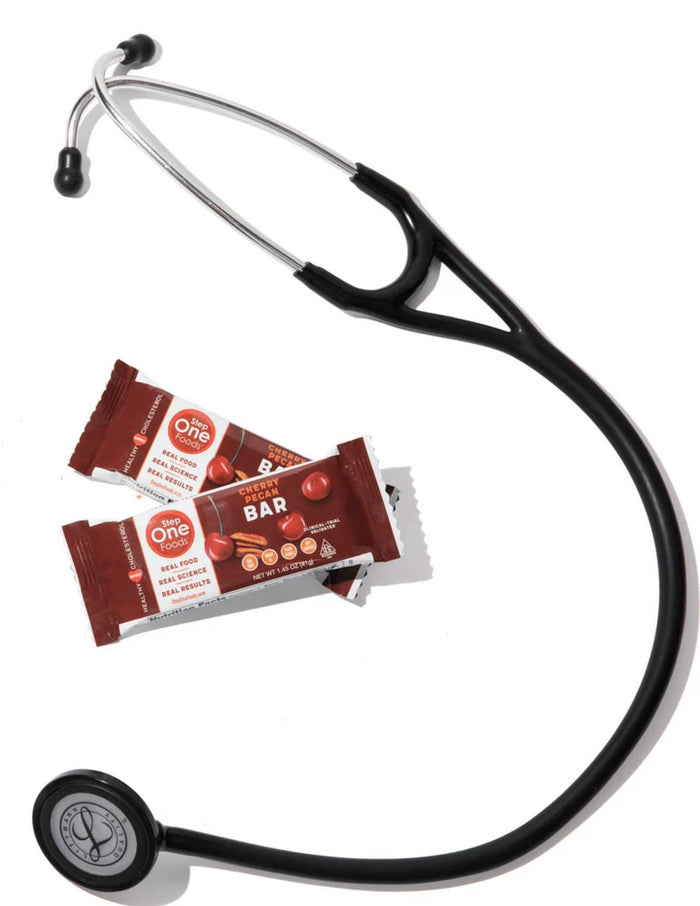
Strength is one piece of a complete routine that also includes aerobic activity, which I cover in how much exercise you actually need. And of course, muscle is built from what you eat as much as how you train, so pairing strength work with good nutrition (the kind Step One Foods is designed to make easy) rounds out the picture.
If you're new to this site and found this useful, I write one of these evidence-based articles every week. You can get them in your inbox by joining my email list at the bottom of this page. No spam, no requirement to buy anything, just practical knowledge.
The Science Behind It
Tested & Proven Results.
- Cardiologist formulated
- Supported by over 500 publications
- Clinically-proven, in a double-blind randomized trial with Mayo Clinic and The University of Manitoba
80% of participants lowered their cholesterol in just 30 days. With just two servings per day, Step One Foods offers a proven-effective way to naturally lower LDL (bad) cholesterol.
Try Step One Foods Today!