Updated July 2026
Phytosterols are natural compounds found only in plants, and they lower cholesterol by blocking its absorption in your intestine. They are one of the most reliable food-based tools we have for bringing LDL down, and they work in two ways that are worth understanding, because it explains how to get the most out of them. For the full picture on sterols, including safety and dosing, start with everything you need to know about plant sterols.
What are phytosterols?
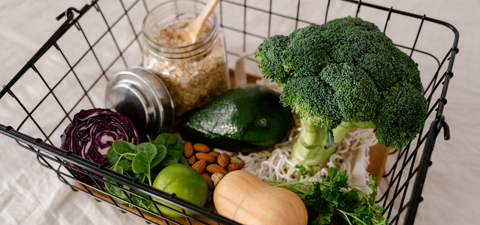
Phytosterols are the plant world's version of cholesterol. They are found in vegetables, fruits, nuts, seeds, legumes, and vegetable oils, and structurally they look similar, but not identical, to the cholesterol that comes from animal-based sources. That incomplete resemblance is exactly what makes them useful.
How do phytosterols lower cholesterol?
Because they are so structurally similar, they compete for absorption with animal-based cholesterol in the intestine. But because they are structurally a bit different, they aren't actually absorbed themselves. Although you would think that this would lead to the majority of their impact on circulating cholesterol levels, it turns out we have an internal cholesterol circulation that phytosterols impact even more profoundly.
Every time we eat, we secrete bile into the intestinal tract. Bile is essential to helping us digest food. It is also very rich in cholesterol. In fact, we use the cholesterol circulating in our bloodstream to make bile. Because we are very efficient animals, any bile not used up in the digestive process gets reabsorbed. So anything that can reduce bile reabsorption can cause more of the circulating cholesterol to head to the liver to make more bile, thus dropping blood cholesterol levels. Bile cholesterol is animal-based cholesterol, so phytosterols will also reduce bile cholesterol reabsorption, helping to lower LDL cholesterol levels even more than through their impact on food-based cholesterol.
Why should phytosterols be taken with food?
Because without food, the mechanism has nothing to work on. If there is no meal in your digestive system, there is no dietary cholesterol to block and little bile released for the phytosterols to act on. Taken with a meal, they can go to work on both sources of cholesterol at once. This is why timing matters as much as dose.
How many phytosterols do you need?
About 2 grams a day, split across two meals, is the amount shown to meaningfully lower cholesterol. At that dose, phytosterols can lower LDL cholesterol by around 10%. The catch is that reaching 2 grams a day through diet alone is genuinely hard. Even a careful vegetarian diet usually delivers well under half that amount, which is why phytosterols are one of the nutrients most people fall short on.
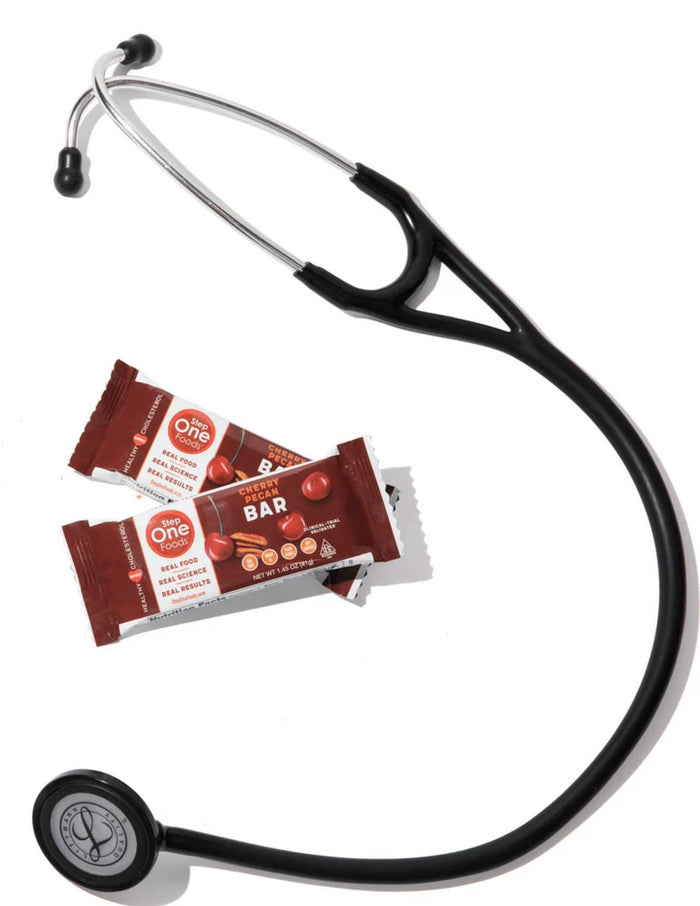
This is exactly why we build meaningful, evidence-based doses of phytosterols into Step One Foods, alongside the fiber and omega-3s that lower cholesterol through their own separate mechanisms. Getting all of them together, in the right amounts and taken with food, is how we proved the approach works in a randomized controlled trial conducted with Mayo Clinic and the University of Manitoba. The maximum LDL reduction seen in the trial was 37.6%, a reduction you would expect from statin medications. Which is only to say that phytosterols may be a powerful lever, but they work best as part of that bigger picture.
If you're new to this site and found this useful, I write one of these evidence-based articles every week. You can get them in your inbox by joining my email list at the bottom of this page. No spam, no requirement to buy anything, just practical knowledge.

From Dr. KlodasFood, but with a
Try Step One Foods Today
Food, but with a
medical degree.
I built Step One Foods for my patients. Two servings a day replace the breakfast and snack you already eat.
Tested in a double-blind, randomized crossover trial conducted at Mayo Clinic and the University of Manitoba, 80% of participants lowered their LDL in 30 days.
Your first order is backed by our money-back guarantee.