Updated July 2026
Most of the sodium conversation is about cutting back. Potassium is the opposite: it's the mineral that works against sodium in your body, and almost none of us get enough of it. If you care about your blood pressure, potassium deserves as much attention as sodium.
What does potassium do for your heart?
It counteracts sodium and helps bring blood pressure down. Where excess sodium raises blood pressure, adequate potassium lowers it, reducing the risk of stroke and lowering overall mortality. It does more than that, too: potassium helps preserve muscle mass, protects bone density, and reduces the formation of kidney stones. Adults should get at least 4,700 mg of potassium per day, but fewer than 2% of Americans actually do.
Why the sodium-to-potassium ratio matters more than either alone.
These two minerals work in tandem, so it's the balance between them that counts. The higher your sodium-to-potassium ratio, the greater your risk of dying from cardiovascular disease, a heart attack, or any cause at all. The problem is how far that ratio has flipped. Our hunter-gatherer ancestors are estimated to have taken in around 11,000 mg of potassium a day against well under 700 mg of sodium, a ratio of about 1 to 16. Today the average person gets more sodium (about 3,400 mg) than potassium (about 2,500 mg), a ratio near 1.4 to 1, essentially upside down from how our bodies were designed to run.
Where do you get more potassium?
From plants, overwhelmingly. A whole-food, plant-based diet is by far the most reliable way to raise potassium while naturally lowering sodium. Some of the richest sources:
| Food | Amount | Potassium |
| Avocado | 1 whole | 975 mg |
| Baked sweet potato | 1 medium | 694 mg |
| Tomato paste | ¼ cup | 664 mg |
| Beet greens, cooked | ½ cup | 655 mg |
| Baked potato | 1 medium | 610 mg |
| White beans, canned | ½ cup | 595 mg |
| Nonfat plain yogurt | 8 oz | 579 mg |
| Banana | 1 medium | 555 mg |
Fish and shellfish are good sources as well.
A few important cautions.
More is not always better here. People on dialysis or with advanced kidney disease need to limit potassium, not increase it, so if you're unsure whether you should be raising your intake, check with your physician first. It's also an open question whether the potassium in salt substitutes delivers the same benefit as potassium from food, so the safest bet is always to err toward real food, not too much, mostly plants.
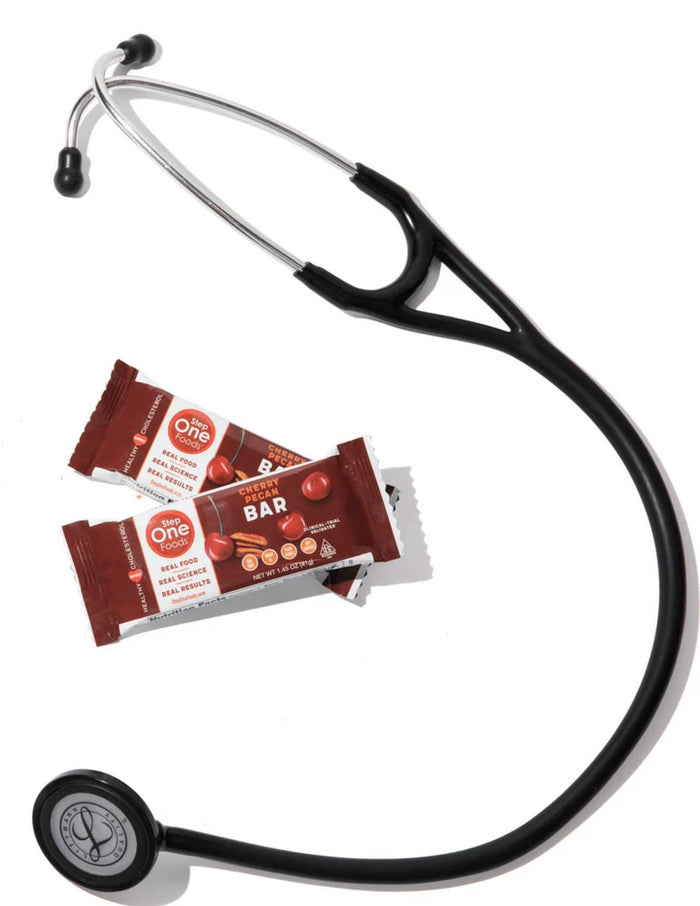
Two servings of Step One Foods provide about 530 mg of potassium on average, among the richer sources you can find, with little to no sodium alongside, which helps tip that all-important ratio back in the right direction. For the other half of the equation, see how much sodium is too much.
If you're new to this site and found this useful, I write one of these evidence-based articles every week. You can get them in your inbox by joining my email list at the bottom of this page. No spam, no requirement to buy anything, just practical knowledge.

The Science Behind It
Tested & Proven Results.
- Cardiologist formulated
- Supported by over 500 publications
- Clinically-proven, in a double-blind randomized trial with Mayo Clinic and The University of Manitoba
80% of participants lowered their cholesterol in just 30 days. With just two servings per day, Step One Foods offers a proven-effective way to naturally lower LDL (bad) cholesterol.
Try Step One Foods Today!