Updated July 2026
Menopause is defined as “the permanent cessation of menstruation due to the loss of ovarian function.” Pretty dry and underwhelming for the massive changes a woman's body goes through in this transition.
Because it's a normal physiologic process and not a disease, menopause is supposed to be something women just endure and move beyond. But if you've been through it, or you're in the midst of “the change,” you've probably realized that nothing about this process feels even remotely normal. That is, unless you think hot flashes, night sweats, mood changes, sleep disturbance, vaginal dryness, urinary urgency and incontinence, weight gain, decreased libido, thinning hair and skin, memory and concentration problems, joint and muscle pain — not to mention heart palpitations and out-of-nowhere high LDL — are all normal.
I don't usually venture outside the conditions I manage. I'm a cardiologist. I deal with chest pain and EKGs. But I felt compelled to write this because I keep seeing female patients suffering with menopausal symptoms while being denied, or being fearful of, a proven, life-enhancing intervention. All based on faulty data. I'm talking about hormone replacement therapy (HRT).
You've probably heard the warnings: it causes breast cancer, it's dangerous, it does more harm than good. These statements became medical dogma. But they are outdated, oversimplified, and in many cases flat-out wrong. To be clear, I am not advocating that every woman should go on HRT. But every woman should at least be given the opportunity to decide for herself whether it's right for her.
Why does menopause affect so much more than reproduction?
Because sex hormones do far more than drive reproduction and libido. Receptors for estrogen, progesterone, and testosterone exist all over the body, so the whole-body drop in these hormones at menopause has far-reaching effects.
The bladder is one example — it's very hormone-sensitive. When estrogen declines, the microbiome of the bladder and vagina changes, making postmenopausal women far more susceptible to urinary tract infections. About 20% of women over 65 will develop a UTI, and close to a third of those will have recurrent infections.
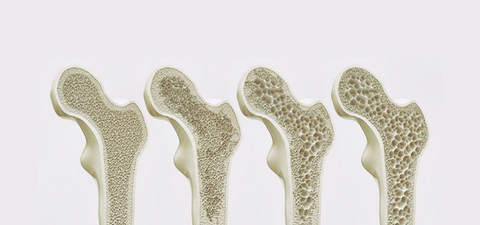
The skeleton is a major casualty. Without estrogen, women can lose as much as 20% of their bone density in the first five years after menopause, with loss then slowing to about 1% a year. As a result, one in two women over 50 will suffer an osteoporosis-related fracture. That's serious — a hip fracture can be a terminal event, with close to 30% of hip fracture patients not surviving one year, and low odds of returning to prior activity levels even for those who do.
The brain is affected too. The risk of dementia and Alzheimer's is significantly higher for women, and while the role of sex hormones isn't fully worked out, even the short-term sleep disruption matters. Estrogen and progesterone help drive circadian rhythms, and their wild swings during perimenopause can wreck the sleep cycle. It's also hard to sleep when you're drenched in sweat.
And then there's the heart. As a cardiologist, I see this almost daily. Rhythm disturbances become more common around menopause, probably from a mix of factors, especially sleep disruption. Most are benign, but that doesn't mean they feel good. Cholesterol profiles almost universally worsen as LDL receptors become less active, and heart disease risk accelerates rapidly, reaching parity with men of the same age about 10 years after menopause. (I've written more on why cholesterol goes up after menopause, and what to do about it.)
Add vaginal dryness and loss of libido, and you have a marked decline in quality of life right around the halfway point of women's lifespans. These may all be “natural” consequences of falling hormone levels, but are we just supposed to sit back and accept them? Would men accept all that?
Wasn't hormone therapy once standard?
It was. HRT was the norm as far back as the 1960s, when epidemiologic studies suggested it improved women's health outcomes. And the benefit seemed logically plausible — women experience real harms after losing their natural hormones, so replacing them looks like an obvious antidote.
But epidemiologic studies aren't proof that a treatment helps more than it harms, because they can't fully account for hidden bias. Women who chose hormones may simply have been more health-conscious, or had better access to care, which alone could explain better outcomes. And treatments that seem beneficial don't always turn out to be.
Here's a sobering story from my own field. In the 1970s and 1980s, cardiologists were confident that suppressing certain heart arrhythmias after a heart attack would save lives, since those arrhythmias were linked to sudden death. So we prescribed drugs to reduce them. Then the CAST trial, halted early in 1989, proved us wrong: the drugs suppressed the arrhythmias but paradoxically increased the risk of dying compared to doing nothing. The treatment was worse than the disease. It was a lesson the medical community never forgot — what seems like it should help isn't always the right thing to do.
That skepticism carried into women's health, and the NIH decided to put HRT to the test with the Women's Health Initiative (WHI), a large, long-term study in over 160,000 postmenopausal women aged 50 to 79, begun in 1993. One arm, the Hormone Therapy Trial, tested whether hormone therapy (equine-based estrogen, with or without synthetic progestin, in pill form) prevented heart disease and other conditions.
What did the WHI actually find?
The estrogen-plus-progesterone arm was halted early over concerns about higher rates of heart attack, stroke, and breast cancer in hormone users. It was CAST all over again — the treatment that seemed so logical appeared to do the opposite. When the data were first presented in 2002, it threw the medical community for a loop. We rushed back to our practices and de-prescribed HRT almost overnight. The relative risk of heart attack was 32% higher in users, breast cancer up 26%, blood clots up 200%. In one stroke, all of it — not just estrogen plus progesterone — was pronounced dead, and prescribing it could put a physician at risk of a malpractice claim. The media had a field day.
What did that WHI reporting leave out?
A great deal, as it turns out — things the investigators de-emphasized at the time.
First, the women studied were the wrong women. The vast majority were over 60 at enrollment, many in their 70s, meaning they started HRT 10 to 20 years after their last period. Second, the hormone cocktail was more like what's in a birth control pill and very different from contemporary HRT. Third, large numbers dropped out over the course of the trial. In other words, we studied the wrong women, on the wrong treatment, and ended up with only partial data.
Then there's the difference between relative and absolute risk, which is easy to weaponize. If 10 out of 10,000 people on placebo develop some abnormality but 15 out of 10,000 do on a drug, that's a “50% higher” relative risk — while the absolute risk rose just 0.05%, one extra case per 2,000 people. In the WHI, the absolute increase in breast cancer was 0.1% in estrogen-plus-progesterone users, one extra case per 1,000 women. Not zero, but far from the near-certainty the headlines implied. And little attention was paid to the fact that there was no difference in the chance of dying from breast cancer regardless of HRT use. Later data also showed no increased breast cancer risk in women taking estrogen alone (appropriate for those without a uterus).
On the heart, once confounding factors were accounted for, the differences in cardiovascular event rates largely disappeared — HRT is not dangerous for the heart. Blood clot risk was genuinely higher, no argument, but that finding is largely irrelevant today because contemporary formulations aren't associated with increased clotting risk.
And perhaps the greatest disservice: almost no emphasis on the positive outcomes seen with HRT, including significant reductions in osteoporosis-related fractures and lower colon cancer risk. Nor any discussion of what withholding HRT meant for the placebo group, even though the signals of reduced quality of life were clear — 11% of the placebo group started HRT during the study, and 38% dropped out.
Why are so many doctors still wary of it?
Because the legacy of that 2002 moment never lifted. Warnings about breast cancer, blood clots, and heart disease got printed on inserts and boxes for every hormone-containing product, even formulations and delivery methods (like vaginal estrogen cream) completely unlike what the trial studied. Prescribing HRT was relegated to “fringe” providers, and medical schools effectively stopped teaching how to manage menopause. We live with that legacy today: fewer than 6% of OB/GYN and primary care providers get even one hour of menopause education in training. The result is a shortage of physicians comfortable managing “the change.”
Meanwhile, the science moved on, even if most women and their doctors never heard about it. Timing of initiation turns out to matter: women who start HRT within 10 years of menopause actually have fewer cardiovascular events than those who don't take hormones. Those who start more than 10 years out see a small bump in events in the first year, then an overall decrease from the second year onward.
Formulation matters just as much. Unlike the pill form, estrogen creams and patches don't raise clot risk, and neither does micronized progesterone, the natural form, whether by pill or pessary. Remember, the WHI used synthetic progesterone and estrogen in tablet form — a wildly different approach from what's available now. For women who want or need to avoid systemic hormones, vaginal estrogen cream effectively relieves dryness and reduces UTI risk without raising the risk of any negative outcome. And we haven't even touched the potential benefits of testosterone supplementation in women.
What the FDA has now changed
For years, that outdated boxed warning stayed on the labels, contradicting the modern evidence. That finally changed. In November 2025, the FDA initiated removal of the black box warning from all estrogen-containing hormone therapy products, citing the outdated interpretation of the early WHI findings that overstated risk in older women. The references to cardiovascular disease, breast cancer, and probable dementia are being removed; a boxed warning about endometrial cancer remains for systemic estrogen-alone products. It's a striking correction — the label finally catching up to two decades of accumulated evidence, and to what many of us treating these patients have watched play out in practice.
What was my own experience?
My menopause was less about hot flashes and night sweats, though I had my share, and more about sleep. For the life of me I could not get more than four or five hours a night, sometimes barely any. I was constantly exhausted, my thinking was slipping, and I was struggling emotionally. Nothing I tried — meditation, melatonin, magnesium, even CBD — made any difference. But having been in the room when those WHI results were announced, I never once considered HRT.
It was only after hearing a random podcast about newer HRT data, and then digging into more recent studies, that I asked my gynecologist to start me on hormone therapy. The improvement in my sleep has been nothing short of miraculous. Looking back, I realize I suffered needlessly for five years, and probably missed out on most of the osteoporosis protection. I just didn't know any better — even as a physician.
I'm not suggesting everything gets better with HRT, or that every woman should take it, or that everyone responds the way I did. What I want you to know is that you have options, many of them, across the various delivery forms, and that the risks are relatively low, though obviously shaped by each woman's individual health. Women have been led to believe we have no options, that we just need to buck up and suffer in silence. That's simply not true.
What can you do beyond hormones?
Quite a lot, actually. HRT is the main pharmacologic option, and there's plenty of evidence it would be a net positive for far more women than are offered it today. But we can also help ourselves through this period, and set ourselves up for better long-term health, through the way we live. If you're a regular reader, this will sound familiar: eating right and exercising regularly has a positive impact regardless of what we're trying to improve.
On diet, the Mediterranean pattern — high in fruits, vegetables, whole grains, legumes, nuts, and olive oil — is associated with less severe menopausal symptoms. A study of more than 6,000 postmenopausal women over nine years found higher adherence correlated with fewer hot flashes and night sweats.
Phytoestrogens, especially the isoflavones in soy, have been studied for symptom relief because they structurally resemble estradiol. Randomized studies show they may reduce the frequency of hot flashes and night sweats, though the effect varies between individuals, likely because of differences in the gut microbiome's handling of isoflavones. And the old idea that phytoestrogens raise breast cancer risk has been summarily debunked — even women who've been through breast cancer treatment can enjoy soy.
Omega-3 fatty acids matter for mood. The estrogen decline of menopause raises depression risk, and higher dietary omega-3 intake is inversely associated with depression in postmenopausal women.
Calcium and vitamin D become crucial for bone health. For women over 50, that's about 1,200 mg of calcium and 600 to 800 IU of vitamin D a day, though individual vitamin D needs may run higher — a simple blood test can tell you. Dietary calcium comes from dairy, leafy greens, and fortified foods, while sunlight drives your own vitamin D production. It's hard to get enough vitamin D from food alone, though mushrooms help.
And if there's ever a time when staying physically active is critical, it's after menopause. You can take all the calcium you want, but without weight-bearing and resistance training it'll just go toward kidney stones. And without expending more energy, the metabolic slowdown most women experience will drive steady weight gain. The good news is you don't need extreme routines. For metabolic health, spending most of your time in Zone 2 is ideal — it builds aerobic capacity, improves mitochondrial efficiency, burns fat, raises insulin sensitivity, and lowers blood pressure. To estimate your Zone 2 range, subtract your age from 220, then multiply by 0.6 for the low end and 0.7 for the high end. Or use the talk test: you're working hard enough to be somewhat breathless but can still hold a conversation, just not sing. Add resistance training at least twice a week for 30 minutes, whether with a trainer or with resistance bands and a do-it-yourself program at home.
Menopause is a time of tremendous change, physically and psychologically. But it's not a time to suffer in silence or simply accept our fate. Helping ourselves through nutrition and physical activity — the exact same steps that improve cholesterol — goes a long way toward better health, especially once our estrogen is gone. And for most women, HRT, whether systemic or local, can be a safe, effective, and genuinely proactive step toward a smoother transition into the second half of our lives. The WHI deprived too many women of quality of life for too long. It's time to move on.
If you're new to this site and found this useful, I write one of these evidence-based articles every week. You can get them in your inbox by joining my email list at the bottom of this page. No spam, no requirement to buy anything, just practical knowledge.

The Science Behind It
Tested & Proven Results.
- Cardiologist formulated
- Supported by over 500 publications
- Clinically-proven, in a double-blind randomized trial with Mayo Clinic and The University of Manitoba
80% of participants lowered their cholesterol in just 30 days. With just two servings per day, Step One Foods offers a proven-effective way to naturally lower LDL (bad) cholesterol.
Try Step One Foods Today!