A cardiologist explains
The cholesterol target changed. Millions haven’t caught up.
What the new LDL numbers mean, and a food-first way to start closing the gap.
 Elizabeth Klodas, MD, FACCPreventive cardiologist

Doctors have long known that lower LDL cholesterol means lower heart disease risk. How low LDL should go was less clear. For years, guidelines didn’t set a goal number at all; they focused on how intensively to treat people at different levels of risk.
What the numbers mean
We now understand much more about what different LDL levels do. At around 100 mg/dL, plaque build-up is expected to slow markedly. At 70, it’s expected to stop. At 55, some plaque is expected to regress. These are approximations for any one person, but the direction is clear: lower LDL, less plaque.
The new targets
The latest ACC/AHA guidelines now set those numbers as goals: 100 mg/dL for everyone, 70 for people with risk factors for heart disease, and 55 for people with known heart disease. They also advise checking Lipoprotein(a) once in a lifetime.
How the country measures up
A new study of national health data found that nearly one in three U.S. adults without heart disease now have LDL above the new goals, and about three in four of them receive no cholesterol-lowering treatment.
Part of that is mechanical: the target moved, so more people are above it, and someone has to recheck each person’s number against the new goal. Part of it is awareness. And part of it is food. Reaching an LDL of 100 is hard without eating in a way that supports healthy cholesterol. In many cases we’re not just under-treated; we’re under-nourished.
A start that doesn’t need an appointment
The next physical is the right time to ask for the actual LDL number, not just whether cholesterol looked “fine,” along with the target that fits personal risk. Food is a step that can start before then.
I built Step One Foods for exactly this kind of gap: food formulated around soluble fiber, plant sterols, antioxidants and unsaturated fats, aimed at the number the guidelines are about. It isn’t a substitute for working out whether medication is also needed. It’s a sensible first step.
Why I built Step One
For years I told patients to eat more soluble fiber, plant sterols, plant-based omega-3s and antioxidants. Almost no one could get enough of them, day after day, from an ordinary grocery list. So I built the food. Step One Foods puts all four into oatmeal, bars, granola, pancake mix, smoothie mix and more. Two servings a day replace a breakfast and a snack people already eat. No meal plan, no new diet.
Tested in a randomized controlled trial
Step One was tested in a randomized controlled trial conducted with Mayo Clinic and the University of Manitoba.
“I love that my day begins with either oatmeal or pancakes and ‘what to have for breakfast’ is just taken care of.”
Amy, Step One customer
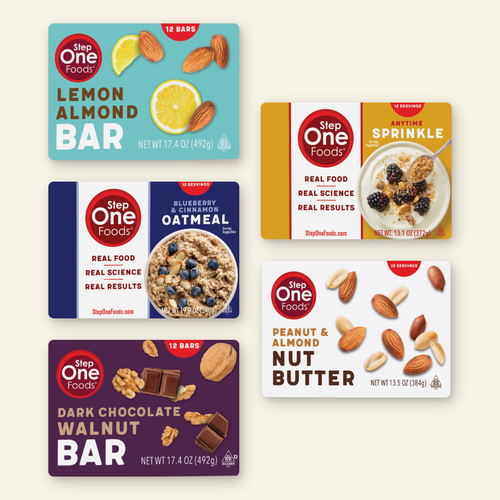
Start with the 30-Day Protocol Pack
A 30-day supply of the two-servings-a-day protocol. Subscribe and save 20%; most people subscribe so they don’t run out partway through the 30 days the trial measured.
Free shipping on orders over $99. The first order is backed by a money-back guarantee.
See the 30-Day Protocol PackQuestions
Is this a supplement?
No. It’s food: oatmeal, bars, pancakes and more, eaten in place of a breakfast and a snack.
How does it taste?
Step One won a 2025 Good Housekeeping Snack Award.
Can someone on cholesterol medication use it?
Yes. Step One is food, designed to work alongside a physician’s plan. Medication changes should only be made with a doctor.
What about allergens?
Each product page lists its allergens. BBQ Puffs are the only nut-free product.
What if it isn’t right for me?
The first order is backed by a money-back guarantee.
Step One Foods is food, not medication. Talk with your doctor before making any change to a prescribed treatment.