
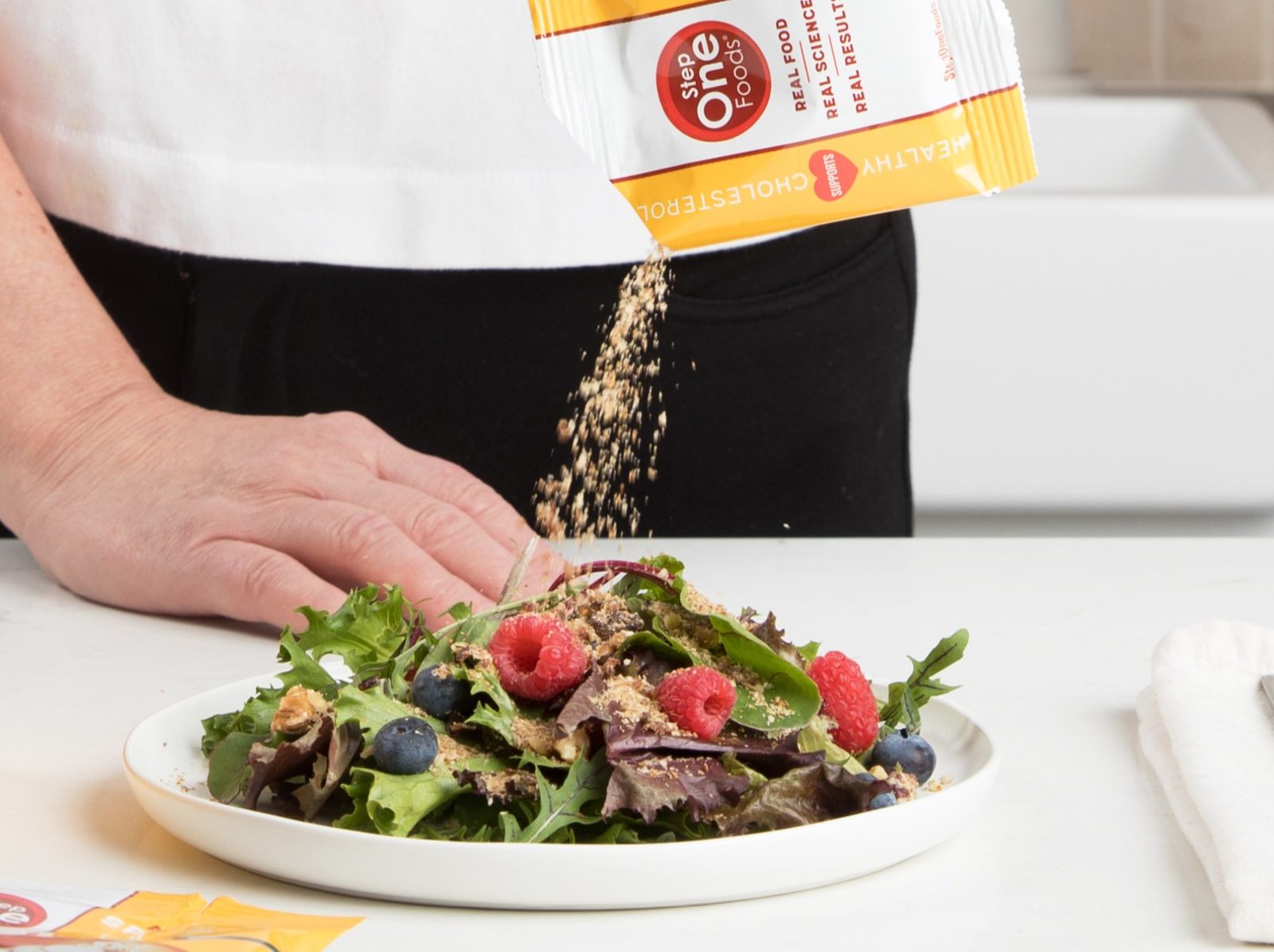
I follow the Mediterranean Diet and exercise regularly taking/teaching yoga, Qigong, aerobics classes and fusion belly dancing. However as I aged my total cholesterol and LDL numbers have continued to rise. I had the same lipid panel taken and evaluated by the same company twice, once before I started eating Step One Foods twice a day and then 6 weeks later. My LDL improved 28.75 points and total cholesterol improved 31.26 points. I have not had numbers in this range since I was in my 50's.
Cholesterol · Diet patterns
Mediterranean Diet for Lowering Cholesterol: What Works and What's Missing
One of the best-evidenced ways to eat for your heart. Also one of the weaker ways to lower an LDL number, and the trials explain why.
- Cardiologist-created
- Studied at Mayo Clinic
- Every claim sourced

Almost nobody argues against the Mediterranean diet, and this page will not either.
It has better randomized evidence behind it than any other way of eating, and an umbrella review covering 29 meta-analyses and more than 12 million people found strong and consistent evidence linking it to lower risk of death, cardiovascular disease and heart attack.
The question here is narrower. You searched for the Mediterranean diet and cholesterol, which usually means somebody told you a number was too high. So the useful question is what this pattern does to LDL specifically, and the answer turns out to be more interesting than the general endorsement.
What PREDIMED actually showed
PREDIMED randomized 7,447 people in Spain at high cardiovascular risk to a Mediterranean diet with extra-virgin olive oil, the same diet with mixed nuts, or a control diet advised to reduce fat. Over roughly five years, the two Mediterranean groups had about a 30 percent lower rate of heart attack, stroke or cardiovascular death.
That is a large effect from an eating pattern, and it holds up. Cochrane's independent read found the strongest signal on stroke, roughly 14 events per 1,000 people instead of 24, while the trial did not demonstrate a reduction in cardiovascular or total mortality.
What it does to LDL, which is a different question
Cochrane pooled the randomized trials that measured lipids. Compared with another active diet, a Mediterranean diet lowered LDL cholesterol by 0.15 mmol/L, roughly 6 mg/dL, on moderate-quality evidence across seven trials and 947 people.
Compared with no intervention or minimal intervention, the pooled effect was 0.08 mmol/L with a confidence interval crossing zero, on very low quality evidence. Among people who already had heart disease, two trials found no LDL benefit at all against usual care.
A separate meta-analysis comparing Mediterranean with low-fat diets over two years found total cholesterol lower by 7.4 mg/dL, along with 2.2 kg less body weight and lower CRP. Real improvements. Modest ones.
Which means both of these are true at the same time. Eating this way is one of the best things you can do for your cardiovascular risk. And it is not a reliable lever for the specific number your doctor circled on your lab report.
Those two facts get collapsed constantly, usually by articles that quote PREDIMED's event reduction under a headline about cholesterol.
PREDIMED did not give advice. It gave groceries.
This detail rarely makes it into the coverage, and it changes how the trial should be read.
Participants did not simply receive counseling. The olive oil group was handed one litre of extra-virgin olive oil every week, free, with a minimum of 50 mL a day for the participant.
The nut group received 30 grams of mixed nuts a day. For years. Measured intake confirmed people actually ate it: about 50 grams of olive oil daily in one group, roughly six 30-gram servings of nuts a week in the other.
The participants also started from a Mediterranean baseline. Their adherence score before the trial began averaged 8.7 out of 14. These were Spaniards already eating a partly Mediterranean diet, being given supplemental food on top.
So the honest description of PREDIMED is a supplied-dose trial in an already-adherent population. That is a legitimate design, and it is very different from reading a Mediterranean diet article and buying more vegetables.
The parts that do lower LDL, and the doses they need
Inside the Mediterranean pattern there are components with direct, measured LDL effects. Their doses are the useful part.
Ranked by how much they lower LDL per day of effort:
- Nuts. Pooling 25 intervention trials, an average of 67 grams of nuts a day lowered LDL cholesterol by 7.4 percent. Note the amount: PREDIMED supplied 30 grams, under half of that.
- Legumes and pulses. About one serving a day, a median of 130 grams, lowered LDL by 0.17 mmol/L across 26 randomized trials.
- Plant sterols. Not a traditional Mediterranean component at any meaningful dose, and the most dose-predictable lever there is. About 2 grams a day lowers LDL by 8.4 percent, pooled across 124 studies. Ordinary food, Mediterranean or otherwise, supplies 200 to 400 milligrams.
Olive oil, specifically
Olive oil is the emblem of this diet and the weakest part of the LDL case. FDA has only ever allowed a qualified claim for it, which is the category the agency uses when evidence is limited and not conclusive, at about 1 1/2 to 2 tablespoons a day replacing saturated fat.
In the EUROLIVE trial, the polyphenols in olive oil raised HDL and lowered oxidized LDL in a dose-dependent way. LDL cholesterol itself was not where the benefit appeared. Olive oil earns its place by replacing butter and by what its polyphenols do, and treating it as an LDL treatment overstates it.
Fish
Fish is a staple of the pattern and belongs there. Omega-3s are a triglyceride story though. The American Heart Association notes that at 4 grams a day, EPA and DHA cut triglycerides by 30 percent or more while LDL can actually rise. Eat the fish. Do not expect it to lower LDL.
If you are already eating this way and your LDL has not moved, that is a documented pattern rather than a personal failure. See what gets added to a Mediterranean diet or keep reading.
What gets added, rather than replaced
Elizabeth Klodas is a preventive cardiologist, and the Mediterranean diet is what she recommends to patients as a foundation. The problem she kept running into was the follow-up appointment. People genuinely adopted the pattern, felt better, and came back with an LDL that had barely shifted.
The missing piece was rarely willpower. It was that the components with the largest LDL effects, plant sterols above all, are not present in meaningful amounts in any normal diet. Two grams a day is five to ten times what food supplies, and there is no Mediterranean ingredient that closes it.
Step One Foods was built to sit on top of whatever you already eat. Each serving in the published trial delivered at least 5 grams of fiber, 1,000 milligrams of omega-3 fatty acids, 1,000 milligrams of plant sterols and 1,800 micromoles of antioxidants.
Two servings a day was the protocol, swapped for something already in the day rather than added to it.
“The Mediterranean diet is the right foundation. It was never designed to deliver a sterol dose, because nobody in the Mediterranean was trying to hit one.”
Elizabeth Klodas, MD, FACC · Board-certified cardiologist
Cochrane 2019 (7 RCTs); Sabaté J, et al. Arch Intern Med, 2010 (25 trials); Ras RT, et al. Br J Nutr, 2014 (124 studies); Kopecky SL, et al. The Journal of Nutrition, 2022.
Real food. Real science. Real results.
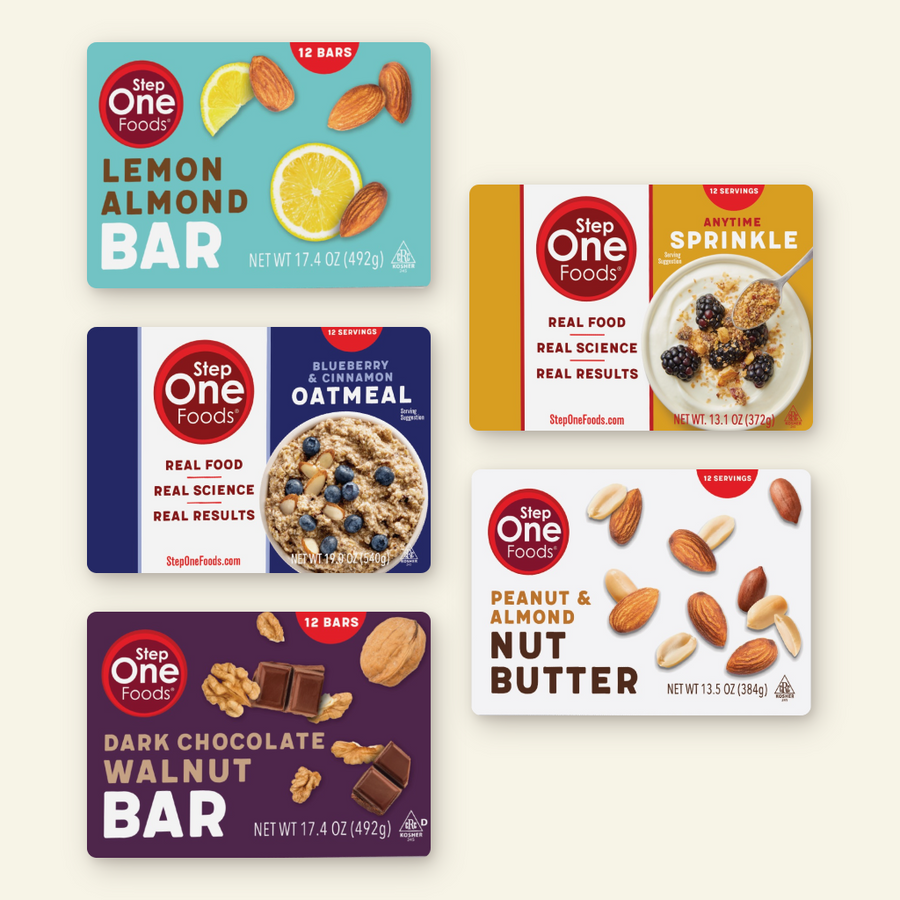
The 30-Day Starter Pack sits on top of a Mediterranean diet rather than replacing it. Two servings a day for a month, then a re-test.

“I follow the Mediterranean Diet and exercise regularly. However as I aged my total cholesterol and LDL numbers have continued to rise.”
The 30-Day Starter Pack
The LDL-specific doses a Mediterranean diet does not supply, in food you swap for something already in your day.
- 2 g of plant sterols a day across two servings, the dose the research used
- Fiber, omega-3 ALA and antioxidants in every serving
- Free shipping over $99
- 30-day money-back guarantee
From people already eating this way
THIS SAYS IT ALL! Cholesterol / LDL. 9/7/23 started using Step One Foods: 205 / 107. 1/2024 started Mediterranean Diet + Step One: 179 / 104. 4/2024 using both diet and Step One Foods: 170 / 93. 7/2024 still using both diet and Step One: 162 / 80.
I prefer Anytime Sprinkle, Oatmeal and the dark chocolate crunch Bars. These are filling and actually help curb hunger because of all the nutrients in them. My overall cholesterol went down 57 points after just a couple of months eating these foods. I do exercise daily and eat only good fats (avocado, olive oil, salmon) but I have experienced a real difference in lowering my LDL.
Sources
- Estruch R, et al. Primary Prevention of Cardiovascular Disease with a Mediterranean Diet Supplemented with Extra-Virgin Olive Oil or Nuts. N Engl J Med, 2018 (republication of the PREDIMED trial).
- PREDIMED study design and supplied-food protocol (extra-virgin olive oil 1 L/week; mixed nuts 30 g/day).
- Rees K, et al. Mediterranean-style diet for the primary and secondary prevention of cardiovascular disease. Cochrane Database of Systematic Reviews, 2019.
- de Lorgeril M, et al. Mediterranean Diet, Traditional Risk Factors, and the Rate of Cardiovascular Complications After Myocardial Infarction: Final Report of the Lyon Diet Heart Study. Circulation, 1999.
- Dinu M, et al. Mediterranean diet and multiple health outcomes: an umbrella review of meta-analyses. Eur J Clin Nutr, 2018.
- Nordmann AJ, et al. Meta-analysis comparing Mediterranean to low-fat diets for modification of cardiovascular risk factors. Am J Med, 2011.
- Sabaté J, Oda K, Ros E. Nut consumption and blood lipid levels: a pooled analysis of 25 intervention trials. Arch Intern Med, 2010.
- Ha V, et al. Effect of dietary pulse intake on established lipid targets: a systematic review and meta-analysis of randomized controlled trials. CMAJ, 2014.
- US FDA. Qualified health claims for olive oil and for oleic acid and risk of coronary heart disease.
- Covas MI, et al. The effect of polyphenols in olive oil on heart disease risk factors: a randomized trial (EUROLIVE). Ann Intern Med, 2006.
- Skulas-Ray AC, et al. Omega-3 Fatty Acids for the Management of Hypertriglyceridemia: a Science Advisory From the American Heart Association. Circulation, 2019.
- Ras RT, Geleijnse JM, Trautwein EA. LDL-cholesterol-lowering effect of plant sterols and stanols across different dose ranges. Br J Nutr, 2014.
- Kopecky SL, Alias S, Klodas E, Jones PJH. Reduction in serum LDL cholesterol using a nutrient compendium in hyperlipidemic adults unable or unwilling to use statin therapy. J Nutr, 2022.
- Cardiologist-created
- Studied at Mayo Clinic
- Real food, not supplements
Step One Foods is food, not medication, and it is not a substitute for treatment your physician has recommended. If a statin is needed, a statin should be taken. Talk with your doctor before changing how you manage your cholesterol.
Effect sizes above are from the published trials linked in the sources list. Where a source reported results in mmol/L, that unit is used here rather than a converted percentage. Individual results vary.
