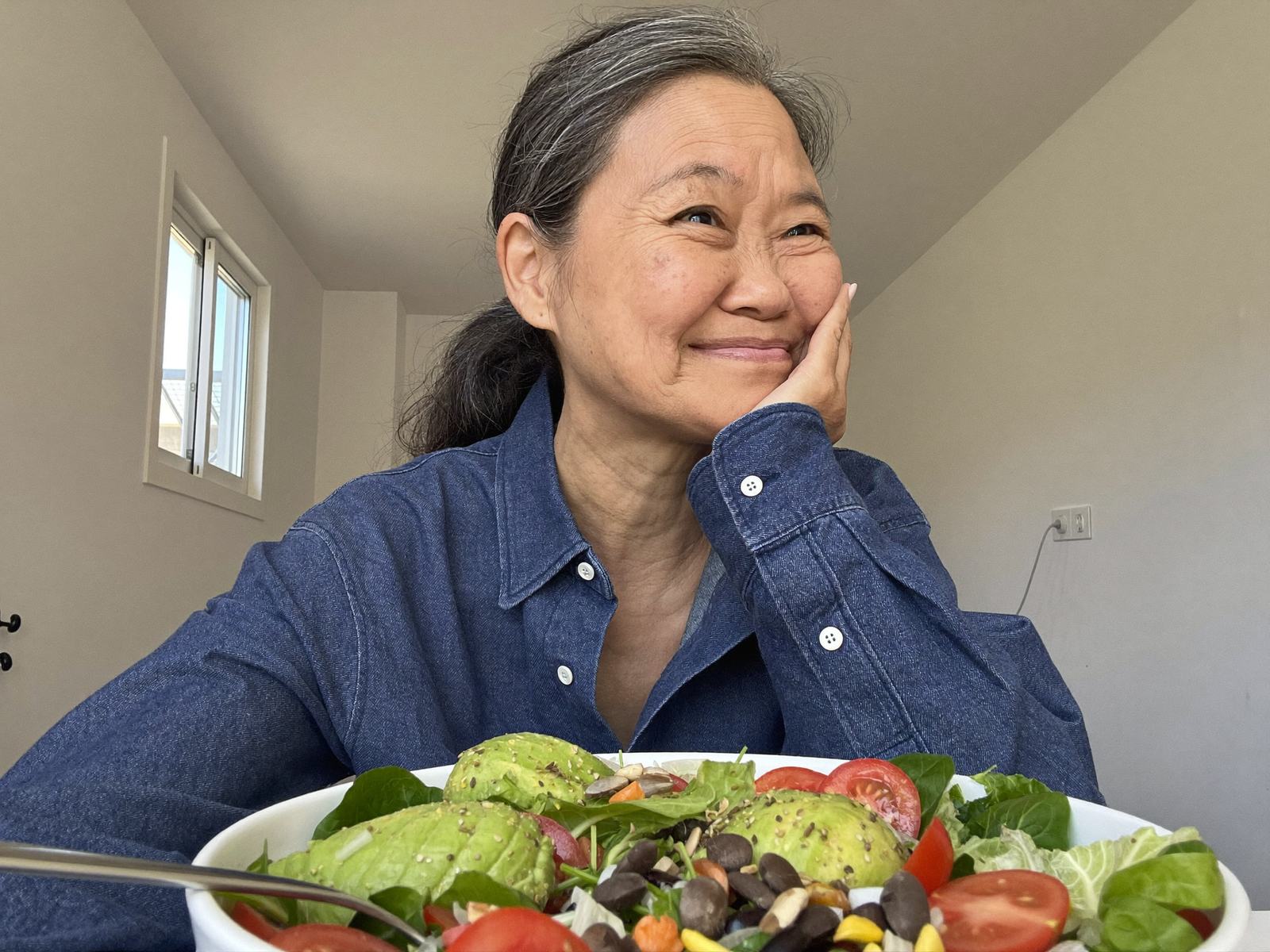
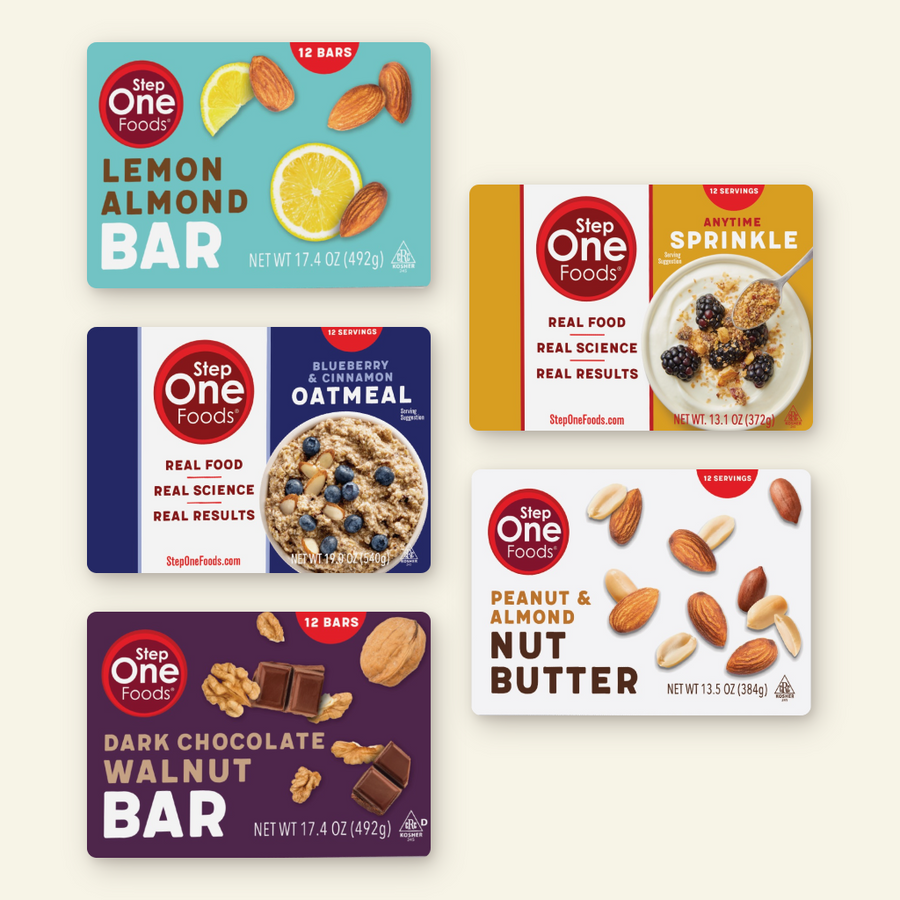
I've had decent cholesterol numbers my whole life and then menopause hit and it started to go up every year, little by little. I was at a point where my overall cholesterol was at 260 and my doctor started mentioning taking a statin. I found Step One online and decided to give it a try. I bought bars, the pancake mix and the everything sprinkle and ate one of them twice a day for two months.
Cholesterol · Causes
What Causes High LDL? Why Cholesterol Stays High Even When You Eat Well
Six explanations that have nothing to do with willpower, and how to tell which one is yours.
- Cardiologist-created
- Studied at Mayo Clinic
- Every claim sourced

There is a specific frustration in cutting back on the things you liked, walking most days, losing some weight, and opening a lab result that looks like last year's.
It is worth knowing that this is common and that it usually has an explanation. Several of the strongest drivers of LDL cholesterol are not dietary at all, and the ones that are dietary tend to be about amounts rather than effort. Here they are in the order worth checking.
1. Something else is raising it
Before anything gets blamed on diet, this list deserves a look, because these causes respond to treating the cause and not to eating better.
Thyroid
An underactive thyroid raises LDL, including in its subclinical form where symptoms are mild or absent. Treating it works: levothyroxine therapy in subclinical hypothyroidism produced about a 14 percent decrease in LDL cholesterol and a 9 percent decrease in total cholesterol.
If your LDL climbed and nobody has checked your thyroid recently, that is a reasonable thing to ask for.
Medications you are already taking
High-dose thiazide diuretics, at 50 mg a day or more, raise LDL by roughly 10 percent. Low-dose hydrochlorothiazide at 12.5 to 25 mg does not appear to affect lipids at all, so the dose matters. Some beta blockers, corticosteroids, retinoids and certain other drugs can also push lipids up.
Never stop a prescribed medication over this. It is a conversation to have, and often there is an alternative.
Other medical causes
Nephrotic-range protein loss in the kidneys, obstructive liver disease, Cushing's syndrome, pregnancy, growth hormone deficiency and anorexia nervosa can all raise measured cholesterol.
Two details worth knowing: ordinary chronic kidney disease does not typically raise LDL on its own, and in cholestatic liver disease an abnormal particle called lipoprotein X inflates the measured value, so an alarming LDL can be partly an artifact of the test.

2. Genetics, which is more common than people think
Familial hypercholesterolemia is an inherited condition that keeps LDL high regardless of diet. Pooled across 42 general-population studies covering more than seven million people, its prevalence is about 1 in 311.
Roughly 1 percent of the people who have it have been diagnosed. Among people who already have atherosclerotic cardiovascular disease it is far more common, about 1 in 17.
The threshold that should prompt a clinician to consider it is an LDL above 190 mg/dL in an adult, or above 155 mg/dL in a child. Family history of early heart disease raises the suspicion further.
Genetics does not mean diet is pointless. It means the starting point is higher and the target takes more work to reach, and it is a reason to get an accurate diagnosis rather than to keep adjusting breakfast.
3. The menopause transition, which is sharper than most people expect
This one surprises people because it does not feel like a gradual aging effect. It is not spread across a decade.
In the SWAN cohort, LDL cholesterol rose at 1.57 mg/dL per year in the years leading up to the final menstrual period. Within 12 months of that final period, the rate more than tripled, to 5.20 mg/dL per year.
So a woman who ate the same way, exercised the same amount and weighed roughly the same can have a genuinely different lipid panel inside two years. Nothing about her behavior changed. Her estrogen did.
The broader age pattern differs by sex. In a study of 133,450 people, men's LDL rose 64 percent between ages 20 and 49. Women's LDL held flat from 18 to about 35, then rose 42 percent through age 59.
High total cholesterol peaks in midlife: 6.0 percent of US adults aged 20 to 39, 16.7 percent at 40 to 59, and 11.3 percent at 60 and over.
4. You are probably still over on saturated fat
This is the one dietary cause that tends to be a genuine surprise to careful eaters.
Only 34 percent of US adults meet the recommendation of keeping saturated fat under 10 percent of daily calories. Among the people who do not meet it, intake averages close to 14 percent of calories.
That gap is easy to sit in without noticing. Cheese, butter on vegetables, full-fat dairy, the coconut oil in a health-food-aisle snack and the fatty cut of meat twice a week will do it while every individual choice looks defensible.
5. Exercise and weight loss do less to LDL than their reputation
Both are worth doing. Neither is a strong LDL lever specifically, and this is where a lot of discouragement comes from.
In a meta-analysis of randomized trials, aerobic exercise alone produced reductions limited to triglycerides. Diet, and diet combined with exercise, carried the LDL reduction. Lifestyle-induced weight loss lowered LDL by about 1.28 mg/dL per kilogram at 12 months, which means a hard-won 10 kilograms buys roughly 13 mg/dL.
There is also a measurement wrinkle in obesity: LDL cholesterol is frequently normal or only slightly raised while LDL particle number and small dense LDL rise. A reassuring LDL number can understate risk.
6. The dose gap, which is the most fixable one
Set aside the causes above and there is still a common situation left: someone eating genuinely well whose LDL has not moved. Usually the foods are right and the amounts are far below what the trials used.
Two examples, both measurable:
- Soluble fiber. LDL falls about 0.057 mmol/L for every gram per day, so the dose is the whole story. Average total fiber intake in the US runs 18 grams a day for adult men and 15 for women, well short of recommendations, and national surveys do not separately track soluble fiber at all.
- Plant sterols. The amount used in trials is about 2 grams a day. Ordinary unfortified food supplies somewhere between 200 and 400 milligrams. There is no vegetable that closes a gap that size.
If you have ruled out the medical causes and you are still stuck, the dose gap is the part you can close this month. See how the amounts were built into food
What a cardiologist does with this list
Elizabeth Klodas ordered the thyroid panel, took the family history, reviewed the medication list, and then arrived at the same wall her patients did. The dietary advice was sound and the amounts were unreachable from a grocery store, so the follow-up appointment kept producing the same disappointment.
Step One Foods puts fiber, plant sterols, omega-3s and antioxidants into ordinary food at the amounts used in research.
In the published trial each serving delivered at least 5 grams of fiber, 1,000 milligrams of omega-3 fatty acids, 1,000 milligrams of plant sterols and 1,800 micromoles of antioxidants, and the protocol was two servings a day.
None of that replaces finding out why your number is high. Get the thyroid checked, get the family history on the record, and if your LDL is above 190 ask specifically about familial hypercholesterolemia. Then close the dose gap, because it is the part of the list you control.
“People arrive assuming they failed. Usually they were handed a target and no way to reach it, and sometimes the cause was never dietary in the first place.”
Elizabeth Klodas, MD, FACC · Board-certified cardiologist
Beheshti SO, et al. Circulation, 2020; Matthews KA, et al. J Am Coll Cardiol, 2009 (SWAN); Dietary Guidelines scientific report; Kopecky SL, et al. The Journal of Nutrition, 2022.
Real food. Real science. Real results.
Thirty days of two servings a day at the amounts used in the trial, then a repeat panel. It is a clean test of whether dosing was the missing piece.

“I've had decent cholesterol numbers my whole life and then menopause hit and it started to go up every year.”
The 30-Day Starter Pack
The amounts from the research, in food you swap for something already in your day.
- 2 g of plant sterols a day across two servings, the dose the research used
- Fiber, omega-3 ALA and antioxidants in every serving
- Free shipping over $99
- 30-day money-back guarantee
Different causes, same frustration
My LDL has been creeping up and I am fighting genetics when it comes to high LDL. I did your products for 30 days and I retested. My LDL was 160 and I am down in 30 days to 143. I am amazed and shocked. I have ordered products again and will continue for another 6 months to see where I end up. I still have a high Apolipoprotein B but not terrible. All my other lipid factors are normal.
My cholesterol has been consistently on the high side since being diagnosed with Hashimoto's Thyroiditis 25 years ago. I did nothing differently, other than start eating two bars a day, and my total cholesterol went down for the first time in 10 years. I went from 230 to 215 for total cholesterol, LDL went from 150 to 127, and my HDL went from 55 to 62.
Sources
- Beheshti SO, et al. Worldwide Prevalence of Familial Hypercholesterolemia: meta-analyses of 11 million subjects. Circulation, 2020.
- CDC Office of Genomics and Precision Public Health. How common is familial hypercholesterolemia?
- American Family Physician. Editorial: hypercholesterolemia and when to consider familial hypercholesterolemia, 2024.
- Khera AV, et al. Diagnostic Yield and Clinical Utility of Sequencing Familial Hypercholesterolemia Genes in Patients With Severe Hypercholesterolemia. J Am Coll Cardiol, 2016.
- Talmud PJ, et al. Use of low-density lipoprotein cholesterol gene score to distinguish patients with polygenic and monogenic familial hypercholesterolaemia. Lancet, 2013.
- Review of monogenic versus polygenic causes of severe hypercholesterolaemia.
- Matthews KA, et al. Are changes in cardiovascular disease risk factors in midlife women due to chronological aging or to the menopausal transition? (SWAN). J Am Coll Cardiol, 2009.
- Balder JW, et al. Lipid and lipoprotein reference values from 133,450 Dutch Lifelines participants: age and gender specific baseline lipid values. J Clin Lipidol, 2017.
- Endotext / NCBI Bookshelf. Secondary causes of dyslipidemia.
- Endotext / NCBI Bookshelf. Dyslipidemia in chronic kidney disease.
- Endotext / NCBI Bookshelf. Drugs affecting lipid metabolism.
- Endotext / NCBI Bookshelf. Obesity and dyslipidemia.
- Meta-analysis of levothyroxine therapy in subclinical hypothyroidism and lipid outcomes, 2017.
- Lipoprotein X in cholestatic liver disease and spurious LDL elevation, 2025.
- Brown L, Rosner B, Willett WW, Sacks FM. Cholesterol-lowering effects of dietary fiber: a meta-analysis. Am J Clin Nutr, 1999.
- USDA Agricultural Research Service. Dietary Data Brief: fiber intake of the U.S. population (WWEIA/NHANES).
- Dietary Guidelines for Americans scientific report data on saturated fat intake versus the recommendation.
- Ras RT, Geleijnse JM, Trautwein EA. LDL-cholesterol-lowering effect of plant sterols and stanols across different dose ranges. Br J Nutr, 2014.
- Jenkins DJA, et al. Effects of a dietary portfolio of cholesterol-lowering foods vs lovastatin on serum lipids. JAMA, 2003.
- Meta-analysis of lifestyle-induced weight loss and lipid outcomes at 12 months, 2020.
- Meta-analysis of aerobic exercise, diet, and combined interventions on lipid profiles, 2012.
- Kopecky SL, Alias S, Klodas E, Jones PJH. Reduction in serum LDL cholesterol using a nutrient compendium in hyperlipidemic adults unable or unwilling to use statin therapy. J Nutr, 2022.
- Cardiologist-created
- Studied at Mayo Clinic
- Real food, not supplements
Step One Foods is food, not medication, and it is not a substitute for treatment your physician has recommended. If a statin is needed, a statin should be taken. Talk with your doctor before changing how you manage your cholesterol, and never stop a prescribed medication without discussing it first.
Effect sizes above are from the published studies linked in the sources list. Individual results vary.