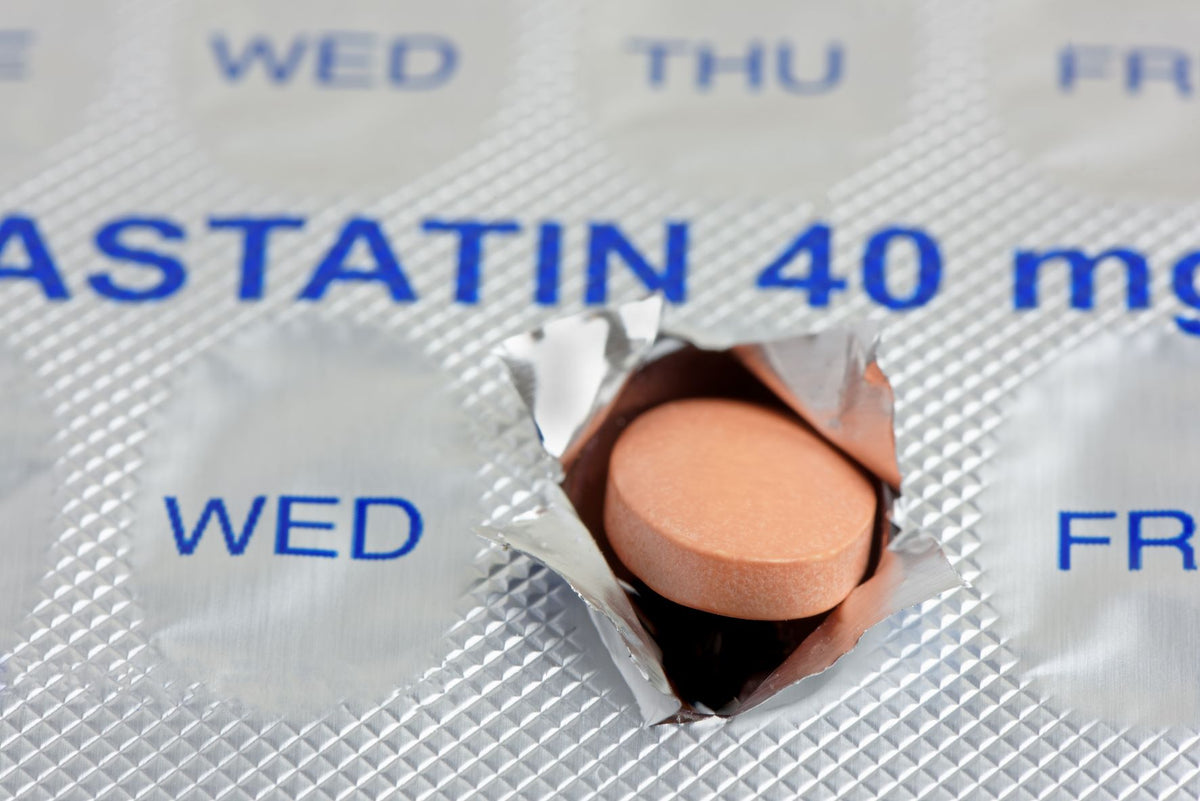
When I started Step One foods a few months ago, I was taking 40 mg. of Atorvastatin daily. Saw the Cardiologist last week, and my cholesterol levels were much improved. He changed the dose down to 10mg. daily. That is a win, win, for me, less statins, equals much less muscle ache/pain.
Cholesterol · Medication
Statin Side Effects: What's Real, What's Rare, and What to Ask Your Doctor
The incidence rates from blinded trials, the much higher rates people report in the real world, and why those two numbers disagree.
- Cardiologist-created
- Studied at Mayo Clinic
- Blinded-trial data only

Start with the part that is not in dispute. Statins work, and the size of the benefit is well measured. Across 26 randomized trials and 170,000 people, every 1.0 mmol/L of LDL cholesterol reduction produced about a 22 percent reduction in major vascular events, along with lower all-cause mortality.
That is the backdrop for everything below. This page exists because the side effect question deserves real numbers rather than either reassurance or alarm, and because a lot of people are quietly not taking a medication they were prescribed without telling anyone.
Muscle symptoms: the blinded evidence
This is where the honest answer diverges most sharply from the common one.
SAMSON was designed to settle it. Sixty people who had already stopped statins because of side effects took, in random order, months of atorvastatin, months of an identical placebo, and months of no tablet at all, rating their symptoms daily.
Symptom intensity was 16.3 on statin months and 15.4 on placebo months. On no-tablet months it was 8.0.
So the symptoms were real, substantial, and almost entirely reproduced by a pill containing nothing. Six months after the trial ended, half the participants were taking a statin again.
Real-world reporting looks nothing like this. Registries and observational studies put statin-associated muscle symptoms at 7 to 29 percent of patients. Both sets of numbers are honestly collected. The gap between them is what researchers call the nocebo effect: expecting a side effect produces it.
Saying so is not the same as saying the pain is imaginary. In SAMSON people genuinely hurt. The question a blinded trial answers is what caused it, and the answer changes what to do about it.
Which is why rechallenge is standard practice
GAUSS-3 recruited 491 people with documented intolerance to two or more statins and rechallenged them under blinded conditions. Muscle symptoms appeared on atorvastatin but not on placebo in 42.6 percent of them. Fewer than half of a group selected specifically for statin intolerance had symptoms that tracked the drug.
In ODYSSEY ALTERNATIVE, statin-intolerant patients rechallenged with atorvastatin 20 mg over 24 weeks reported skeletal muscle adverse events at 46.0 percent, against 32.5 percent in the comparison arm.
Cardiology guidance reflects this. Many patients who report statin-associated muscle symptoms tolerate a rechallenge, a different statin, or a lower dose. The European Atherosclerosis Society consensus documents that alternate-day or twice-weekly dosing still lowered LDL cholesterol by 12 to 38 percent and was tolerated by roughly 70 percent of previously intolerant patients.
The serious ones, with rates
Rhabdomyolysis
The severe muscle breakdown people are most afraid of is genuinely rare. Hospitalized rhabdomyolysis occurred at 0.44 cases per 10,000 person-years with atorvastatin, pravastatin or simvastatin taken on their own.
New-onset type 2 diabetes
This one is real and dose-dependent. In the pooled trial data, low or moderate intensity statins produced new diabetes diagnoses at 1.3 percent per year against 1.2 percent on placebo. High intensity statins ran 4.8 percent against 3.5 percent.
About 62 percent of the excess cases, meaning the cases attributable to the statin rather than the background rate, occurred in people whose blood sugar was already in the top quarter at baseline.
The investigators concluded that any downside from the small glucose rise is already contained within the net cardiovascular benefit, and guideline authors state plainly that new-onset diabetes during statin therapy is not a reason to stop the statin.
Liver enzymes
A 2026 individual participant data meta-analysis confirmed a real but small signal. Abnormal liver transaminases occurred in 0.30 percent of statin users per year against 0.22 percent on placebo.
Other liver function abnormalities ran 0.25 percent against 0.20 percent. Severe liver injury occurs in roughly 0.001 percent of patients, which is why routine enzyme monitoring was dropped from standard practice.
Do statins cause dementia?
This question gets asked roughly ten thousand times a month, so it deserves a direct answer: the evidence does not support it.
The confusion has a real origin. In 2012 the FDA added information to statin labels about cognitive effects described as generally nonserious and reversible, alongside information about raised blood sugar. That label change was widely reported and is still circulating.
What came afterward points the other way. A systematic review found no significant difference between statin and placebo on short-term cognitive testing, and pooled long-term data across 23,443 patients followed for 3 to nearly 25 years did not show harm.
In a contemporary study of 18,846 adults aged 65 and over followed for 4.7 years, statin use was not associated with incident dementia, mild cognitive impairment, or decline in any cognitive domain.
If you have noticed memory changes while taking a statin, that is worth reporting to your doctor. It is not evidence that the drug caused them, and stopping without discussing it trades a documented cardiovascular benefit for an undocumented cognitive one.
Are side effects different in women?
In unblinded real-world surveys, new or worsening muscle symptoms were reported by 31 percent of women and 26 percent of men.
That is a modest difference, and it comes from the kind of unblinded data that the trials above show tends to overstate attribution. There is no good blinded evidence of a large sex difference in true statin side effects.
Both sides of the ledger, same scale
A Lancet review put benefits and harms in the same units. Treating 10,000 people for five years with an effective statin regimen prevents major cardiovascular events in about 1,000 people who already have vascular disease, or about 500 people at increased risk.
Over the same five years in the same 10,000 people, it causes about 5 cases of myopathy, 50 to 100 new diagnoses of diabetes, and 5 to 10 hemorrhagic strokes.
Those are the real trade-offs, and for most people at meaningful cardiovascular risk they are not close. This is why cardiologists push back when patients stop quietly.

What to ask at your appointment
Bring these. They are more productive than asking whether statins are safe.
- If I have muscle symptoms, is it worth trying a different statin, a lower dose, or non-daily dosing before we call it intolerance?
- What is my actual cardiovascular risk, and what LDL number are we aiming for?
- Was my blood sugar already near the top of the normal range before we started?
- If I want to try food and lifestyle changes first, how long do I have, and when should I re-test?
- If I am going to add a food-based approach, should we keep the medication going at the same time?
That last question matters more than it looks. Guidelines position a heart-healthy lifestyle as foundational therapy, with medication added on top of it rather than instead of it. For most people the honest answer is both.
The 30-day food test, as something to discuss
Elizabeth Klodas practices preventive cardiology and prescribes statins. She also spent years watching patients who could not tolerate them, or who were determined to try something else first, get handed a photocopied list of foods and no plan for hitting the amounts on it.
Diet built specifically around cholesterol-lowering foods does work. The Portfolio dietary pattern, stacking viscous fiber, plant sterols, soy protein and nuts, lowered LDL cholesterol by about 17 percent across controlled trials, on high-certainty evidence.
The obstacle has always been the doses, especially plant sterols, where ordinary food supplies 200 to 400 milligrams against the 2 grams a day that produces a measured effect.
Step One Foods was built to deliver those amounts in two servings a day, and then tested. In a double-blind randomized crossover trial published in The Journal of Nutrition, 60 adults with high cholesterol enrolled across two academic medical centers and 54 completed.
Two servings a day for four weeks lowered LDL cholesterol by an average of 8.8 percent and total cholesterol by 5.1 percent, with no other dietary changes and 95 percent compliance confirmed by blood testing.
The trial found no significant change in triglycerides, HDL, blood sugar, insulin or inflammation. LDL and total cholesterol are the claims.
“A statin is a good drug. The patients I worried about were the ones who stopped taking one and told nobody, and then did nothing else either.”
Elizabeth Klodas, MD, FACC · Board-certified cardiologist
If a statin is needed, a statin should be taken. Food is the foundation underneath it, not a replacement for it, and the decision belongs to you and your doctor together.
Cholesterol Treatment Trialists' Collaboration, Lancet 2022 (19 double-blind trials); Nissen SE, et al. JAMA 2016 (GAUSS-3, n=491).
Real food. Real science. Real results.
Thirty days of two servings a day, then a repeat lipid panel. Bring the result to your doctor and decide from there.

“Saw the Cardiologist last week, and my cholesterol levels were much improved. He changed the dose down to 10mg daily.”
The 30-Day Starter Pack
A month of the foods, at the amounts used in the published trial. Designed to run alongside whatever your doctor has you on.
- 2 g of plant sterols a day across two servings, the dose the research used
- Fiber, omega-3 ALA and antioxidants in every serving
- Free shipping over $99
- 30-day money-back guarantee
People who did this with their doctor
I've had high cholesterol for years and cannot take statins due to the muscle and joint pain they cause. My cardiologist recommended Step One Foods, so I ordered all of the products and ate two different Step One products every day for three months. After, I saw my doctor and we were both elated with the results of my blood test! My LDL cholesterol dropped 53 points and my blood pressure was 100/60, the lowest it's been in years.
When I received the results of my blood work on June 10, 2021, my cholesterol was showing 296! My doctor was asking if I would start on a statin pill, and I asked him to give me a chance to get it down by trying the Step One Foods products that I had read about. My doctor agreed and suggested that I stop eating all fried foods, and he wanted me to check my blood work in 2 to 3 months.
Sources
- Howard JP, et al. Side Effect Patterns in a Crossover Trial of Statin, Placebo, and No Treatment (SAMSON). J Am Coll Cardiol, 2021.
- Herrett E, et al. Statin treatment and muscle symptoms: series of randomised, placebo controlled n-of-1 trials (StatinWISE). BMJ, 2021.
- Cholesterol Treatment Trialists' Collaboration. Effect of statin therapy on muscle symptoms: an individual participant data meta-analysis of large-scale, randomised, double-blind trials. Lancet, 2022.
- Gupta A, et al. Adverse events associated with unblinded, but not with blinded, statin therapy in ASCOT-LLA. Lancet, 2017.
- Stroes ES, et al. Statin-associated muscle symptoms: impact on statin therapy. European Atherosclerosis Society Consensus Panel Statement. Eur Heart J, 2015.
- Nissen SE, et al. Efficacy and Tolerability of Evolocumab vs Ezetimibe in Patients With Muscle-Related Statin Intolerance (GAUSS-3). JAMA, 2016.
- Moriarty PM, et al. Efficacy and safety of alirocumab vs ezetimibe in statin-intolerant patients (ODYSSEY ALTERNATIVE). J Clin Lipidol, 2015.
- Graham DJ, et al. Incidence of hospitalized rhabdomyolysis in patients treated with lipid-lowering drugs. JAMA, 2004.
- Cholesterol Treatment Trialists' Collaboration. Effects of statin therapy on diagnoses of new-onset diabetes and worsening glycaemia: an individual participant data meta-analysis. Lancet Diabetes Endocrinol, 2024.
- US FDA. Drug Safety Communication: Important safety label changes to cholesterol-lowering statin drugs, 2012.
- Cholesterol Treatment Trialists' Collaboration. Individual participant data meta-analysis of adverse events listed on statin product labels. Lancet, 2026.
- Richardson K, et al. Statins and cognitive function: a systematic review. Ann Intern Med, 2013.
- Zhou Z, et al. Effect of Statin Therapy on Cognitive Decline and Incident Dementia in Older Adults. J Am Coll Cardiol, 2021.
- American Heart Association. Statin Safety and Associated Adverse Events: a Scientific Statement.
- Cholesterol Treatment Trialists' Collaboration. Efficacy and safety of more intensive lowering of LDL cholesterol: meta-analysis of data from 170,000 participants in 26 randomised trials. Lancet, 2010.
- Collins R, et al. Interpretation of the evidence for the efficacy and safety of statin therapy. Lancet, 2016.
- Grundy SM, et al. 2018 AHA/ACC/Multisociety Guideline on the Management of Blood Cholesterol: synopsis. Ann Intern Med, 2019.
- Chiavaroli L, et al. Portfolio Dietary Pattern and Cardiovascular Disease. Prog Cardiovasc Dis, 2018.
- Kopecky SL, Alias S, Klodas E, Jones PJH. Reduction in serum LDL cholesterol using a nutrient compendium in hyperlipidemic adults unable or unwilling to use statin therapy. J Nutr, 2022.
- Cardiologist-created
- Studied at Mayo Clinic
- Real food, not supplements
This page is general information, not medical advice, and it is not a substitute for the judgment of your own physician. Do not start, stop or change a prescribed medication based on anything here. If a statin is needed, a statin should be taken.
Step One Foods is food, not medication. Incidence rates above are from the blinded randomized trials and pooled analyses linked in the sources list. Individual results vary.